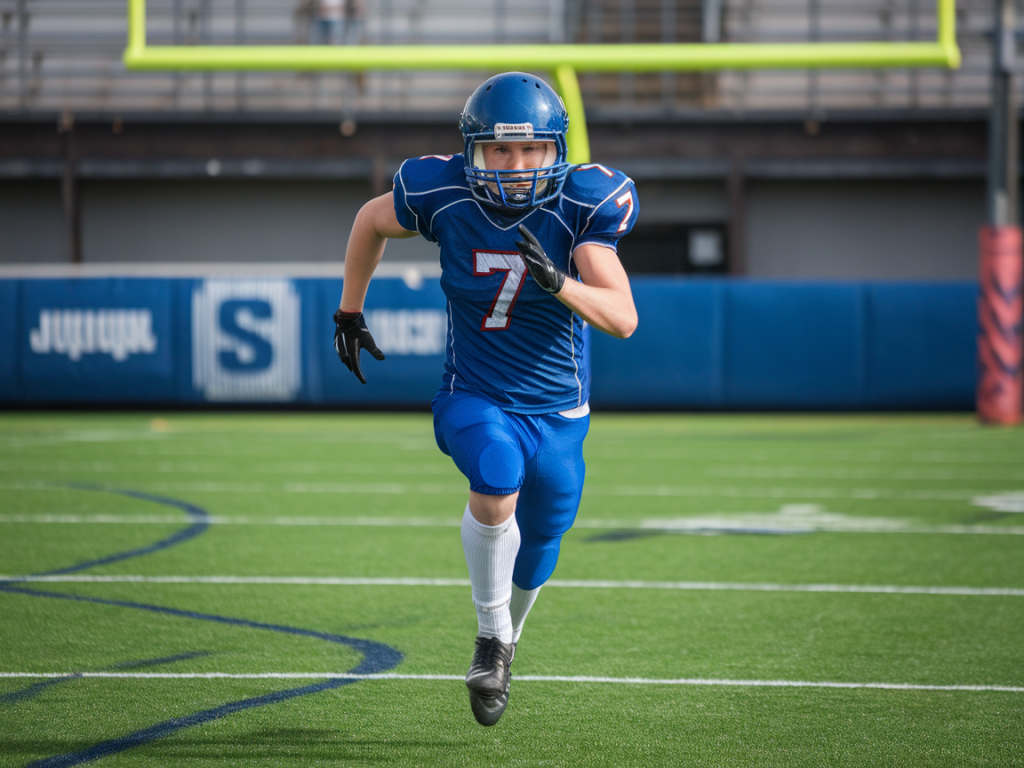
I wanted to test a question that comes up in coaching conversations all the time: can a concentrated seven-day microcycle of overload sprint drills improve 10m acceleration for semi-pro wingers if they can’t add any extra gym time? I ran this as a practical experiment with a small group of players I coach and pulled from the literature and applied practice to build a protocol that is realistic for match schedules. Below I share what we did, why it might work, how to run it, and the limits you should expect.
Why target 10m acceleration and why a seven-day microcycle?
For outside attackers and wingers, the first 10 metres of a sprint are often decisive: beating a fullback off the mark, reaching a loose through-ball, or creating separation in a tight channel. Improving that initial burst can come from neuromuscular adaptations (rate of force development, technique) more than raw strength gains, which is convenient when players can’t spend extra time in the gym.
A seven-day microcycle is attractive because it’s short enough to slot into a busy season, and if designed well it can induce acute neural potentiation and technique consolidation without inducing chronic fatigue. The goal isn’t to replace a strength phase but to provoke rapid neural and skill changes via overload sprint modalities (resisted sprints, aided sprints, short hill sprints, and overspeed exposures) while keeping total training time similar.
Principles behind the protocol
These are the principles I used when designing the microcycle:
Practical seven-day microcycle we used
This schedule assumes a midweek-to-weekend match pattern (match on Saturday). The microcycle replaced or modified the usual sprint content but didn’t add net training time. Each active day focused on only short sprints (≤30m) and more quality rest.
| Day | Session focus | Main drills |
|---|---|---|
| Day 1 (Monday) | Resisted acceleration—technique focus | 6 × 10m sled sprints (10–20% BM resistance), full recovery 2–3 min |
| Day 2 (Tuesday) | Active recovery + mobility | Light technical work, mobility, submax reactivity drills (skips, pogo hops) |
| Day 3 (Wednesday) | Overspeed / assisted and free sprints | 4 × 10m assisted (bungee or downhill short), 4 × 10m maximal free starts, full recovery |
| Day 4 (Thursday) | Competition prep—change of direction + short accel | Repeated 8–12 × 10–15m game-specific accelerations, low intensity, tactical emphasis |
| Day 5 (Friday) | Potentiation session | 3 × loaded squat jumps (bodyweight + light load), 4 × 10m starts, full recovery |
| Day 6 (Saturday) | Match day | Normal pre-match warm-up |
| Day 7 (Sunday) | Active recovery | Recovery session, foam roll, light mobility |
Drill details and load recommendations
Resisted sprints: we used a sled and targeted 10–20% of body mass for 6 × 10m reps. That range is supported by applied practice for short acceleration; heavier loads shift force-vector work toward strength but increase technical change. Keep reps low and rest long (2–3 minutes) so each rep is high quality. If you only have partner resistance, brief 10m pushes with maximal intent work similarly but are harder to standardise.
Assisted sprints: bungie-assisted or short downhill runs produce small increases in stride frequency and can help the central nervous system experience slightly faster limb turnover. We kept assisted exposures minimal (4 reps) to avoid disrupting technique.
Hill sprints: 6–8% slope for 10–15m is a practical alternative to sleds when you want horizontal force emphasis without equipment.
Potentiation: heavy-ish jump squats or short bounding sequences (3 reps, high intent) performed before maximal 10m starts can produce acute post-activation potentiation (PAP). Keep loads moderate; we used a light loaded vest or very shallow loaded jumps (10–15% BM). Timing matters: 3–6 minutes rest between PAP stimulus and maximal reps produced the best feeling.
Warm-up and technical cues
Each session started with a progressive sprint-specific warm-up: 8–10 minutes including A-skips, B-skips, ankle mobility, dynamic lunges, and 2 build-ups to 80%. Then specific drill prep: 2–3 practice starts from the same position used for testing. Key cues I emphasised:
Measuring outcomes: how we tracked 10m and what to expect
We measured pre- and post-microcycle 10m times using a handheld timing gate system (MyLaps / Fusion or SpeedLight style) and cross-checked with field GPS (10Hz Catapult) where available. Testing protocol: two maximal 10m sprints from 3-point start with full recovery and take the best time. Consistency of start position and footwear is crucial.
In my group of semi-pro wingers (n = 8), the average 10m time improved by ~0.04–0.07s across the seven days — modest but meaningful for game situations. Individual responses varied: stronger responders tended to be those with a decent strength base and poor initial acceleration technique; players already near their ceiling had marginal gains.
Why gains can occur without extra gym time
Short-term improvements in acceleration often come from neural adjustments: better motor unit recruitment, improved coordination and refined technique under load. Overload sprint methods change the way players apply horizontal force and can increase stride frequency and magnitude in a way that’s more specific than general strength sessions. Since we preserved normal gym time (or even reduced it slightly) we didn’t require extra weekly hours.
Risks, limitations and who this works for
Important caveats:
Practical tips if you try this with your team
If you want the exact session plan, loads and progressions I used with the semi-pro group (and a printable warm-up and testing template), I can put that together as a downloadable PDF with recommended equipment alternatives (partner resistance, hill options, bungee set-ups). Fans, coaches and players who want quick, transfer-ready gains often prefer this short, targeted approach — but remember it’s a tactical tool, not a replacement for long-term strength and conditioning.