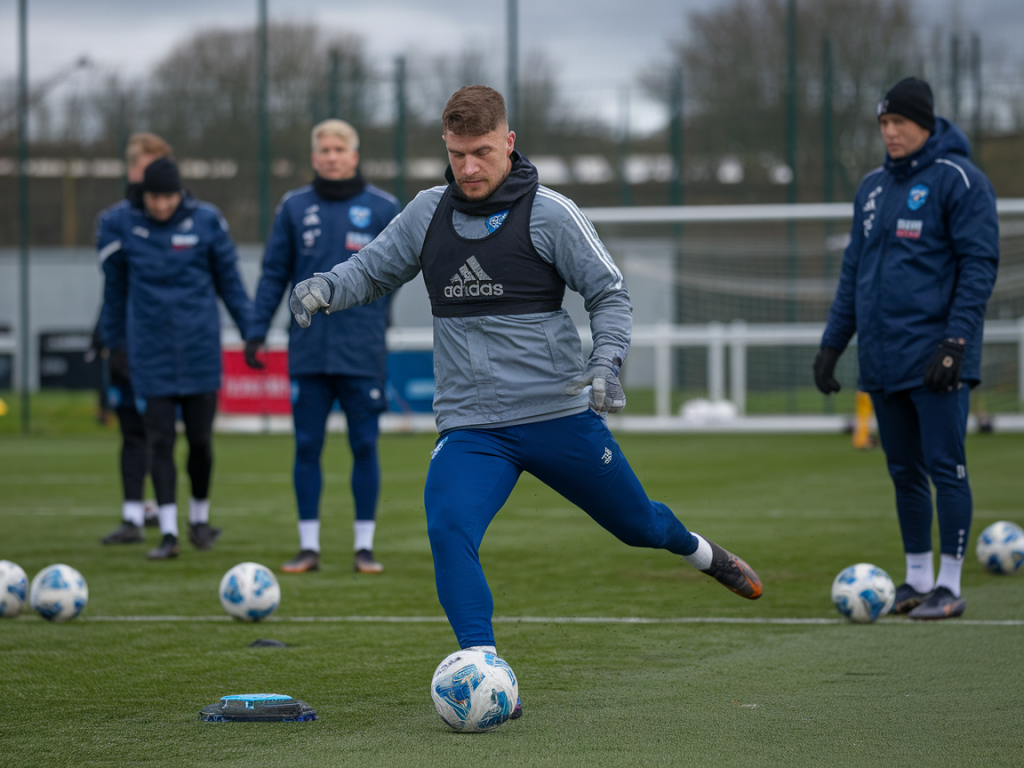
I’ve spent seasons on muddy pitches coaching strikers who are hungry to score but frustrated by an inability to finish the chances they create. Over the years I’ve refined a six-match-week programme that I now use with lower-league forwards to lift their conversion rates — usually by a clear and measurable margin. This isn’t magic; it’s deliberate practice that rebuilds decision-making, technique and composure under pressure. Below I share the exact drills, session structure and measurement tips I use at Samsophsaints Co so you can apply them straight to training.
Why a focused six-match-week plan works
Most lower-league players miss not because they lack athleticism but because they haven’t practised the *conditions* they face in matches. The six-week cycle targets three core areas: mechanics (strike technique), shot selection (decision-making), and match-like pressure (tempo + opponents). Each week builds on the last so the striker’s brain and body learn a new default: finish with higher quality and better choices.
How to measure progress
Before you start, record a baseline. Over two competitive matches track:
Calculate conversion rate = goals ÷ total shots. My target is to double that rate or increase it by at least 50% within six weeks. Use a simple notebook or an app like CoachNow, Hudl, or even a spreadsheet.
Weekly structure (match-week friendly)
This programme fits around regular matches. Each week has two focused sessions: a technical + finishing session midweek and a high-intensity, match-sim session 48–72 hours before the game. Session length: 60–75 minutes. Warm-ups are short and purposeful (10–12 minutes) — dynamic mobility, quick feet, and progressive shooting touches.
Week 1 — Foundations: strike mechanics and target practice
Goal: groove a repeatable striking motion. Focus on foot placement, body lean, and follow-through.
Coaching cues: “plant, stay tall, follow-through to target.” Video a few reps with a phone to show posture errors.
Week 2 — Placement over power
Goal: prioritise picking a corner rather than blasting. A placed shot wins more games than a wild power shot from poor angles.
Measurement: count placed goals vs slices or misses. Aim to increase percentage of placed attempts.
Week 3 — One-touch and reactions
Goal: replicate the speed of match opportunities where time is limited.
Coaching cue: “eyes on the ball, short preparation.” Use a stopwatch to reduce preparation time each set.
Week 4 — Decision-making under pressure
Goal: improve shot selection — when to shoot, when to dribble, and when to pass.
Metric: track shot quality (open vs closed angle), and count poor attempts forced by bad decisions. Aim to reduce poor attempts by 30–50%.
Week 5 — Composure and game simulation
Goal: simulate the psychological pressure of match moments: late minutes, tight scores.
Coaching tip: teach a simple breathing cue — inhale for 3, exhale for 4 — before every penalty or high-pressure shot.
Week 6 — Match-intensity finishing and integration
Goal: blend all learned elements into match-intensity scenarios.
Measurement: run a simulated small-sided match and track conversion rate across 4–6 scoring chances. Compare with your baseline.
Small details that make big differences
- Ball quality and repetition: use the same ball model in training as you use in matches where possible — this controls feel. I often use Mitre or Nike balls for lower-league sessions.
- Recovery and load: do not overload the striker’s legs mid-week — the quality of reps matters more than quantity. Maintain sprint work but reduce total volume during match weeks.
- Video feedback: record sets and show 2–3 clips after training focusing on one correction. Players internalise quick visual cues faster.
- Goalkeeper realism: recruit a competent keeper for training. A poor keeper removes pressure and reduces transfer to match situations.
How to keep improvements sticking
After the six weeks, don’t stop. Convert this into a maintenance routine: two weekly technical sessions and one decision-making session. Re-test every six weeks, and always tie training metrics to match stats — a doubled conversion rate is achievable, but only if your training habits become permanent.
If you want the exact session plans in printable drills, I can format them into a coach’s sheet with progressions and rep counts. At Samsophsaints Co I aim to bridge the gap between science and the realities of lower-league football — this programme is designed with that balance in mind.