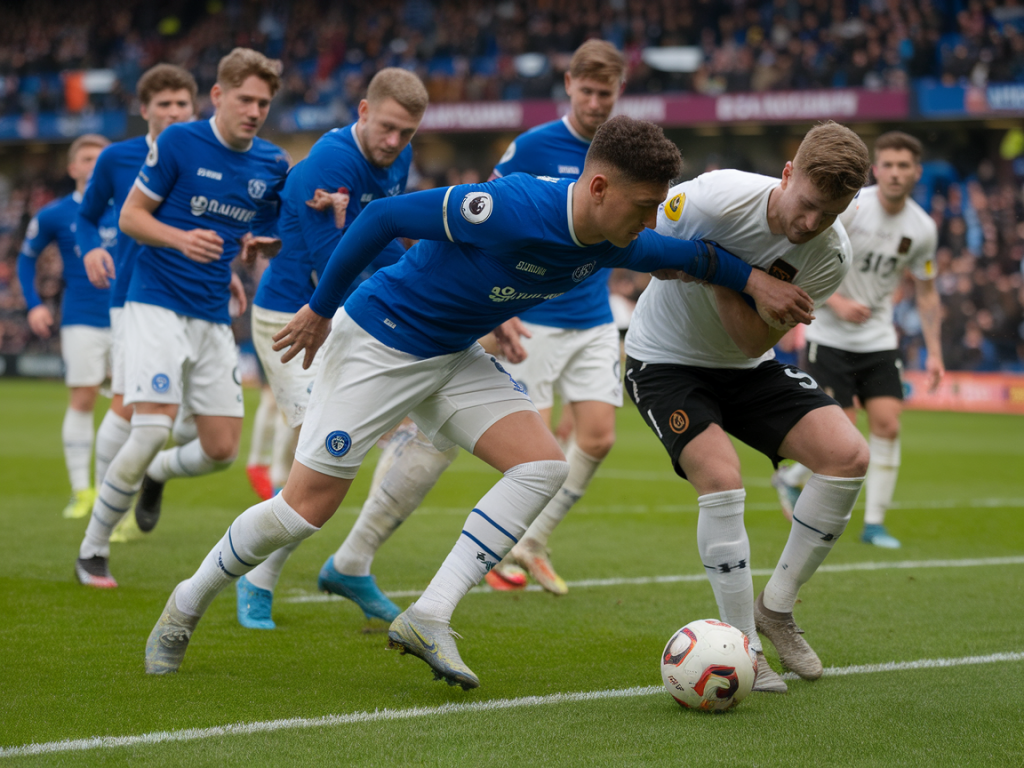
I remember the first time I watched a team regularly win the ball high up the pitch: it wasn't because they had a star striker or an intimidating midfield. It was because they had rehearsed the moment-to-moment decisions that make pressing effective. Pressing triggers — the specific cues that tell players when to close, bump, or channel play — are the DNA of aggressive, collective defence. Coached well, they let whole teams regain possession in the opponent's half, create immediate scoring opportunities, and suffocate opponents before they can set up a play.
The idea behind coaching pressing triggers
Pressing triggers are simple: visible or audible events that prompt a coordinated reaction. A single trigger might be a poor touch, a backwards pass, a switch of play, or a body shape indicating the receiver can’t turn. The danger comes when triggers are vague or when only one player recognises the cue. My job as a coach is to make triggers consistent, rehearsed and unambiguous so that the team responds together.
When I design sessions, I focus on three things: clarity (can every player name the triggers?), timing (do they react fast enough?), and shape (does pressing maintain defensive balance?). The combination gives you moments of high reward — winning the ball near goal — while limiting risk, such as leaving wild gaps behind.
Clear categories of triggers I use
- Ball-related triggers — poor first touch, backward pass to centre backs, aerial knockdown, pass under pressure.
- Receiver-related triggers — receiver facing away from goal, heavy touch, body-open to sideline.
- Positional triggers — pass into a specific zone (e.g., between centre back and full-back), isolated wide player, build-up through a hub player (defensive pivot).
- Time triggers — seconds after restart (e.g., goal kicks), or when a teammate calls for a press.
Practical coaching progression (session structure)
In training I progress through four phases so players internalise triggers and practise the team response. Each phase has a clear coaching focus and duration.
- Recognition (10–15 minutes) — simple drills focusing on identifying triggers. I’ll use 4v2 rondos and reward the defenders for winning the ball after a backwards pass or a heavy touch.
- Reaction (15–20 minutes) — conditioned games where a trigger forces a press. For example, any pass over a white line or any touch with the wrong foot triggers a 4-second coordinated press to win the ball back.
- Cooperation (20–25 minutes) — medium-sided game emphasising support structure: the primary press, the cover shadow, and the channeling player. We set constraints so pressing is high value — recovery runs are penalised if the team concedes under pressure.
- Application (20–30 minutes) — full-team scenario with normal goals. Here the triggers remain the same, but we allow full tactical shape and transition. Video or GPS data can be used after to highlight successful presses.
Key coaching points for each pressing role
- First attacker (pressing trigger receiver) — sprint intensity and diagonal approach; aim to compress space between you and the ball and guide the opponent into the intended channel.
- Supporters — the players who block exits: anticipate the pass, hold a half-step to cover passing lanes, and be ready to step in if the first attacker is beaten.
- Cover player — protect the space behind the press; prevent balls over the top and be ready to engage second ball.
- Goalkeeper and last line — push the offside line, communicate, and be ready to play long if the press is bypassed.
Simple triggers and the exact team reaction (table)
| Trigger | Immediate action | Secondary support |
|---|---|---|
| Back pass to centre back | Striker presses centre back; winger squeezes inside | Defensive midfielder blocks passing lane; full-back holds width |
| Poor first touch | Nearest midfielder explodes to tackle; forward cuts passing option | Cover player occupies space behind and prepares counter-press |
| Isolated full-back receiving | Wide midfielder presses aggressively; inside midfielder jams central support | Center back shifts across to cover or step up depending on ball |
| Switch of play into zone between lines | Two players converge to force wide pass or turnover | Keeper and defensive line push higher to keep opponent contained |
Drills I use (descriptions you can run tomorrow)
- Back-pass chase (6v6+2) — Two neutral players act as outlets. Every time the ball is passed back to a defender, the nearest two attackers press for 6 seconds while teammates hold blocking positions. Reward wins immediately with an extra point or shot.
- Trigger rondo (4v2) — Start simple: defenders get the ball when a back pass happens or after a heavy touch. Increase complexity by adding zones or target lines to force pressing in the opponent's half.
- Half-pitch press game (8v8) — Setup: defenders build from behind. Any pass behind the attacking line triggers a full-team high press. Use split goals and coach transitions strictly.
- Channel training — Create marked channels. When the ball enters a channel, an adjacent attacker must immediately force play to the outside; teammates provide cover. Teaches forcing opponents to the sidelines — where the contact point is lower risk.
Communication and cues
Verbal cues are vital. I teach players a small vocabulary — “back”, “turn”, “open”, “door” (to close a gap) — and rehearse them until they’re automatic. In noisy stadiums, we rely on body language: an angled run, a hand pointing at the receiver’s weaker foot, or a deliberate step to block a passing lane.
Another trick is to use a 'count-in' approach. The first player shouts the trigger (“back!”) and counts: 1 — press; 2 — support; 3 — take the ball. This helps synchronise timing and removes hesitation.
Common mistakes and how I fix them
- Too early or too late — players jump the trigger or wait for the coach. Fix: rhythm drills with metronome-like restarts (every X seconds a new trigger is possible).
- Individual over team — one press without support. Fix: punish with conditioned games where a solo press leaves a big gap and opponents score easily; reinforce cover responsibilities.
- Poor directional pressing — chasing rather than channelling. Fix: paint channels in training and demand players push play to the sideline or back toward a designated zone.
Measuring success
Use simple KPIs: turnovers won in opponent’s half, shots arising within 10 seconds of turnover, and pass completion percentage allowed in attacking third. Tools like GPS vests, Catapult data, or even just video clips can show whether the team’s timing and shape are improving.
When I'm with a team, the moment we start winning consistent high turnovers, you can see confidence grow. Players press smarter, not harder. They read triggers, execute rehearsed actions, and the result is a team that feels alive in the opponent’s half — dangerous, disciplined and collectively ruthless.