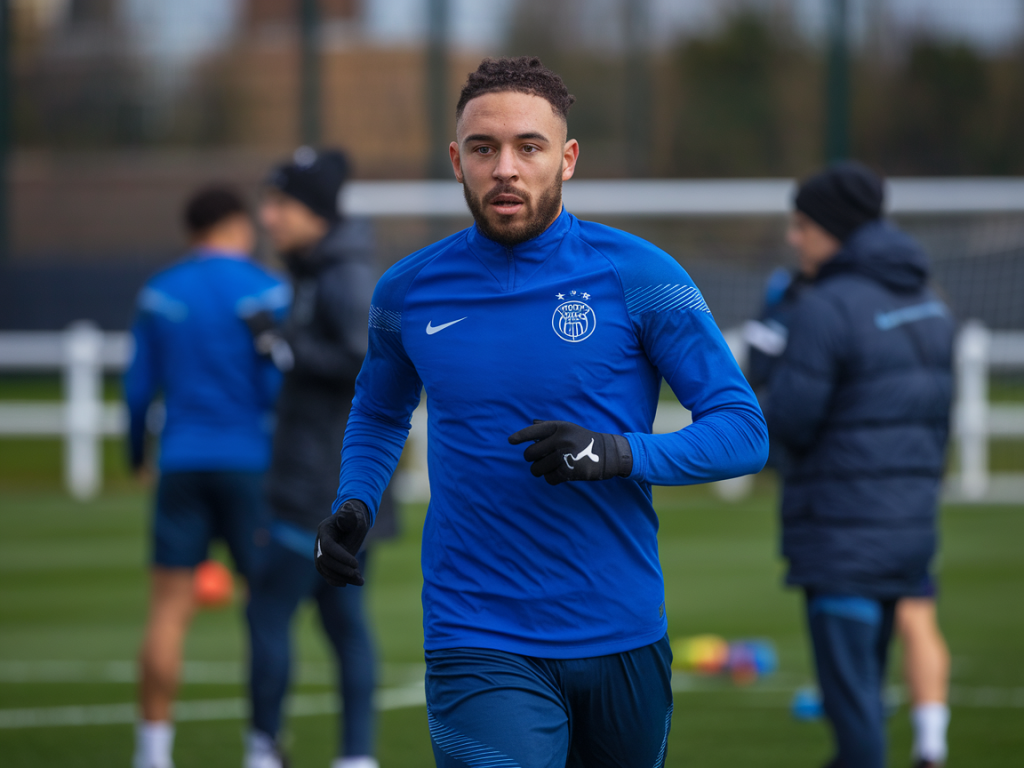
I once worked with a promising wide midfielder who insisted his future was centrally behind the striker. He had the vision and attacking intent, but lacked the subtleties of a true number 10: the first touch to open angles, the tempo control, and the spatial awareness to operate between opposition lines. Over ten focused sessions, we re-mapped his skillset. What follows is the concentrated, practical conversion plan I would use again — and the questions it answers about whether you can realistically turn a wide midfielder into a championship-calibre number 10 in just ten sessions.
What does “number 10” actually mean?
Before training, we must agree on the role. A modern number 10 is not just a creative passer; they are a tempo manager, a pocket attacker, and often the link between midfield and forward line. Key attributes I target:
Why 10 sessions? Realistic expectations
Ten sessions won’t fully change a player’s footballing DNA. What it will do is deliver targeted neurological and tactical shifts: introduce new movement patterns, rewire decision-making under game-like pressure, and build a small but impactful repertoire of technical and positional tools. If the player already has baseline technical ability and a coachable attitude, 10 focused sessions can produce visible improvement and a clear pathway to become a viable number 10 for a championship-level squad.
Session plan overview (10 sessions)
Each session is 75–90 minutes and follows this structure: 15 minutes warm-up with technical emphasis, 25–35 minutes focused drill work, 20–30 minutes game-like scenarios, 10 minutes reflection and homework assignment.
| Session | Main Focus | Key Drill |
|---|---|---|
| 1 | Positioning & spatial awareness | Pocket-finding rondo with shifting gates |
| 2 | First touch & tight control | Pressure first-touch relay + directional turns |
| 3 | Pass variety (short, medium, break lines) | Progressive passing matrix |
| 4 | Combination play & back-to-goal play | 3v2 overloads, back-to-goal receiving |
| 5 | Decision-making under pressure | Time-restricted possession games |
| 6 | Through balls & vision training | Split-field vision passing with mannequins |
| 7 | Late runs & finishing | Arrival runs to finish drill |
| 8 | Transition play & pressing triggers | Counter-press/transition small-sided games |
| 9 | Full-role game templates | 11v11 or 8v8 with tactical restraints |
| 10 | Assessment & personalised action plan | Match simulation + video review |
Selected drills explained
I want to highlight three drills I use repeatedly because they accelerate transfer to match play.
Physical and cognitive markers to track
To measure progress I track tangible metrics. Use a phone/camera and a simple notepad or an app like CoachNow.
Common hurdles and how I address them
Expect resistance in three areas:
Equipment and tech I recommend
Nothing exotic, but a few items speed learning:
How I integrate feedback and ensure long-term transfer
My sessions end with a short video review — 3–4 clips: a good sequence, a mistake, and a decision to discuss. Then a simple homework task: 10 minutes daily with a ball (wall passes, direction-change first touch) and a short mental rehearsal of pockets and triggers. Progress is not just skill but the cognitive map of the role. If the player practices movement and decision templates outside sessions, the gains stick.
When this becomes “championship calibre”
Reaching championship level requires weekly game time against high-level opponents, consistent tactical coaching, strength and conditioning, and periodised load management. The 10-session plan sets the blueprint and jump-starts role-specific skills. If the player continues targeted work, gets competitive minutes, and maintains professional habits (nutrition, recovery, video study), the conversion can certainly mature into championship readiness within a season.
If you want, I can share a printable 10-session PDF, a template for session notes, or a short video library of the drills. I’ve tested this structure with semi-pros and academy players — it’s concise, repeatable and, when paired with honest feedback, it builds the foundation a modern number 10 needs.