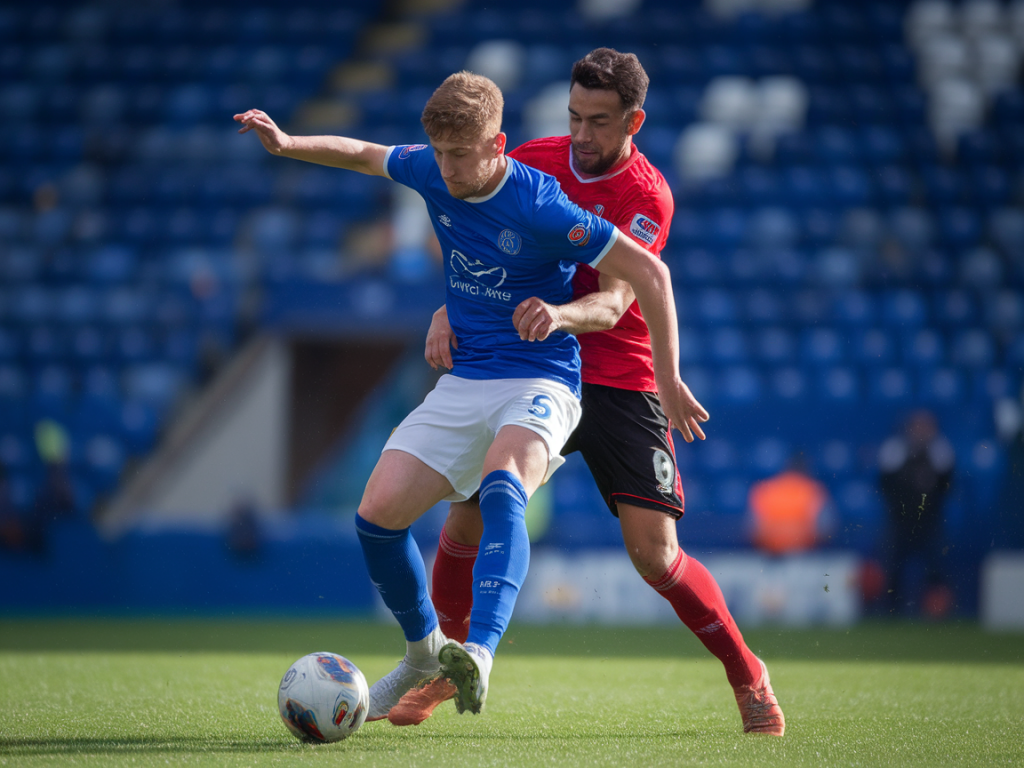
I believe one of the quickest ways to improve a lower-league team's ability to win the ball high is to teach a small set of clear, repeatable pressing triggers. These are simple cues players can recognise and act on instinctively — not complicated patterns to memorise. Over years of coaching and testing drills on the training ground, I've found you can meaningfully sharpen collective pressing in a focused 20-minute session by practising three triggers that are reliable in competitive matches.
Why three triggers and why 20 minutes?
In my experience, lower-league squads benefit most from repetition and simplicity. Three triggers is enough to cover the majority of offensive moments without overloading players’ cognitive load. Twenty minutes gives you three short blocks (warm-up + two focused sets) where intensity stays high, feedback is immediate, and the behaviours can transfer to match situations. This is practical: limited time on the grass, players with part-time availability, and the need for drills that replicate match intensity.
The three pressing triggers I coach
- Backward pass to a deep defender — pressure and cut passing lanes.
- Bad body orientation of the ball-carrier — force the turn or win the ball.
- Sideways pass into half-space with a supporting runner away — double up and isolate the receiver.
How I structure the 20-minute session
I divide the session into a 5–5–10 structure:
- 5 minutes: dynamic warm-up + ball familiarity and cue recognition (walk-through).
- 5 minutes: drill 1 — focused on the backward-pass trigger.
- 10 minutes: combined drill for triggers 2 and 3 with match-like constraints and competitive repetition.
Keeping to the clock is important. Players need short, intense repetitions with immediate corrections. Use a stopwatch and two coaches if possible: one to feed and one to give micro-feedback.
Trigger 1 — Backward pass to a deep defender
Why it works: Lower-league teams often recycle possession to centre-backs under pressure. A backward pass is a clear sign the opponent has shifted forward — and pressing in numbers here can lead to high turnovers.
Drill (5 minutes):
| Set-up | 20x20 yard grid, 6v6 plus two floaters (deep defenders). Attackers start with ball and aim to pass back to floaters. Defending team presses on trigger only. |
| Objective | Defenders (pressing team) must immediately close down the floater when a backward pass is played. Win ball and transition to a 2-touch counter-attack on the coach's target goal. |
| Coaching points |
|
| Progression | Restrict the floater to one-touch; reward successful interceptions with points. |
Small technical tip: teach the press to start with a diagonal step to cover the immediate pass and open the body to the outside. I often use a cone as a visual reference where the press should begin.
Trigger 2 — Bad body orientation of the ball-carrier
Why it works: Players who receive facing their own goal or side-on are limited in options and easier to isolate. Teaching defenders to recognise shoulder orientation allows an individual press to become a collective win.
Drill (part of the 10-minute block):
| Set-up | 30x25 yard half-pitch, 7v7 with neutral wide players. The coach plays into midfield. The pressing team is instructed to pressure only when the receiver's hips/shoulders face back or the blind side. |
| Objective | Close down, block the body, and either force a turnover or a backward pass within 3 seconds. If successful, pressing team counter-attacks for a point. |
| Coaching points |
|
Practice variations: have a defender intentionally show the back to encourage recognition; use video clips in debriefs to reinforce the visual cue.
Trigger 3 — Sideways pass into half-space with a supporting runner away
Why it works: A pass into half-space often precedes a progressive move; the supporting runner's movement away can create temporary isolation and a numerical advantage for pressing teams. Here the press is anticipatory and coordinated.
Drill (second part of the 10-minute block):
| Set-up | 40x30 yard area. 8v8 plus two neutral wingers. Attacking side tries to progress via half-space combinations. Defending side must match numbers but only engage when the ball is played into the half-space and the supporting player moves away (trigger). |
| Objective | On trigger, the nearest defender steps to isolate while a second defender squeezes to cut the pass. If pressing team wins the ball, they play into the neutral to score. |
| Coaching points |
|
How to coach recognition and reduce errors
Drills alone aren't enough. I emphasise three coaching methods during the 20-minute window:
- Call-and-respond: Coach announces the trigger once, then players must act without prompting. After a few reps, stop announcing to test internalisation.
- Video snippets: Use 30–60 second clips on a phone or tablet in the 1–2 minute break to show the exact trigger. Visual memory speeds up recognition on the pitch.
- Immediate consequence: Make the drills competitive — turnovers lead to quick points or sprints. This links the trigger to reward and consequence, speeding learning.
Common pitfalls and how to avoid them
- Over-committing — Players lunging for the ball create big gaps. Fix: coach the second defender's cover-shift and use "squeeze" rather than "lunge" cues.
- Poor body shape on press — Tall, upright posture allows attackers to fake. Fix: teach low balance and the "hook" foot to change direction quickly.
- Lack of communication — Triggers fail if teammates don’t speak. Fix: enforce one-word calls like "Back!", "Shoulder!" or "Half!" and reward vocal players.
Measuring progress in training and matches
In a 20-minute slot you can get meaningful metrics quickly:
- Count successful turnovers from triggers per 5-minute block.
- Measure seconds from trigger to regain possession — aim to reduce it each week.
- Track match incidents: how many high turnovers occur from backward passes, bad body orientation, or half-space entries.
Use a simple spreadsheet or even a notebook to record these numbers; over a month you'll spot trends and the most effective triggers for your team.
Equipment and player setup
You need almost nothing — cones, bibs, a stop watch, and optionally a tablet or phone for videos. If you want to add tech, a simple GPS unit (e.g. Catapult-like starter devices) helps quantify intensity, but it's not necessary to teach the behaviour.
Why this matters for lower-league teams
Pressing high isn't about copying elite teams' vaunted systems; it's about teaching reliable reactions that reduce decision time for opponents. When players know three triggers intimately, their pressing becomes less risky and more rewarding. In matches I've coached where we drilled these cues, turnover locations shifted significantly higher up the pitch, producing more scoring chances and better control of transitions.
If you'd like, I can send a printable one-page drill sheet for the three triggers with suggested progressions you can hand to your captain or coaching team before the next session.