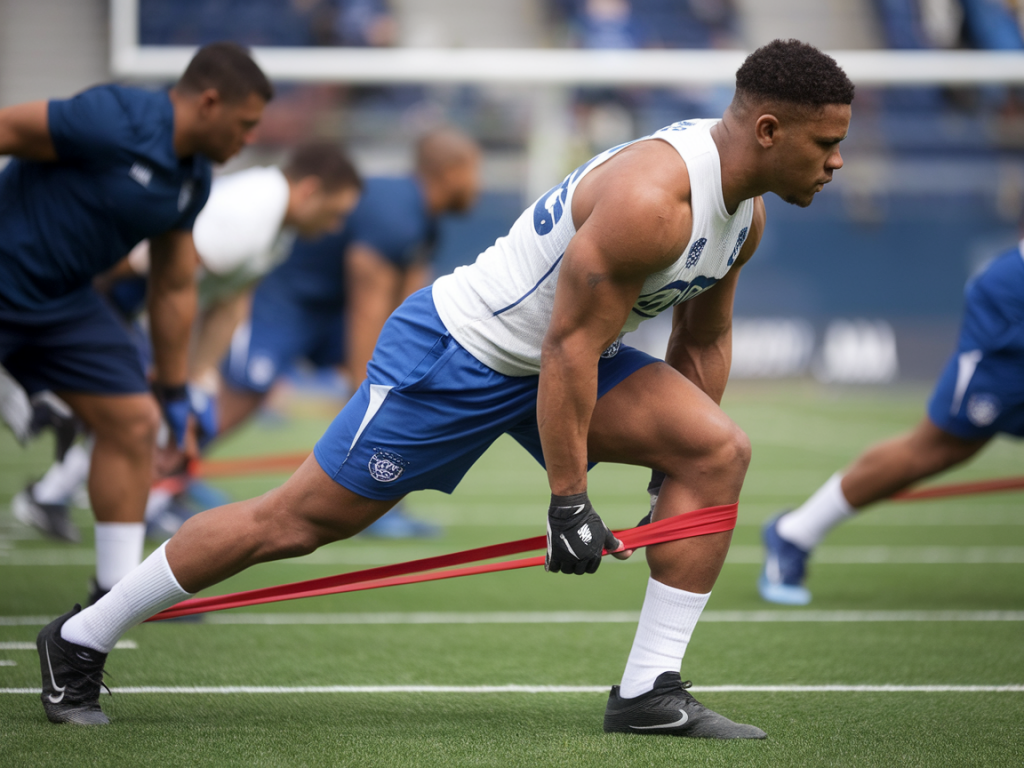
I’ve been coaching and analysing semi-professional teams long enough to know that the warm-up isn’t just a ritual — it’s a critical injury-prevention window. Recently I worked with a semi-pro squad using Catapult GPS/IMU data to see if a 15-minute tailored warm-up could meaningfully reduce hamstring injury risk. The short answer from my practical trial: yes — when that 15 minutes is personalised, monitored and progressive. But it only works if you use the right data and follow a clear structure.
Why focus on a 15-minute warm-up?
Time on training pitches at semi-pro level is tight. Players turn up late, sessions are short, and staff are limited. A 15-minute warm-up is realistic for matchdays and small-field training blocks. The question is whether you can fit neuromuscular priming, dynamic flexibility, and intensity-specific activation into that window without increasing fatigue or missing key stimuli that protect hamstrings.
How Catapult data changes the warm-up game
Catapult devices give us objective, individualised snapshots of external load: peak speed, high-speed running (HSR), sprint efforts, accelerations, decelerations, and load metres. For hamstring risk, the relevant markers are:
Using weekly Catapult trends, I could decide whether a player needed a higher-intensity activation (someone who’d done low external load in previous days) or a controlled, more neuromuscularly focussed warm-up for workload-managed players.
Design principles I used
My approach was built on three simple principles:
15-minute warm-up template (used in practice)
The following is the template I deployed. Within a squad session, players received small modifications based on their Catapult metrics.
| Phase | Duration | Purpose | Example |
|---|---|---|---|
| Activation & mobility | 4 min | Increase core temperature, dynamic hip mobility | Glute bridges (30s), walking lunges with rotation (30s each leg), A/B skips (60s) |
| Force production & eccentric control | 4 min | Hamstring strength & length control | Nordic lowers negatives (3 reps), single-leg Romanian deadlift tempo (6 reps each) |
| Linear speed mechanics | 3 min | Technique at submax speeds | Build-ups 40-60% to 80% (3 x 20m) |
| High-speed exposures | 2 min | Top-end velocity stimulus | 3 x 30m progressive sprints (last 10m at 95-100%) with full recovery |
| Reactivity & decel | 2 min | Change-of-direction loads, posterior chain readiness | 2 x partner-resisted decelerations / cutting reps |
How I used Catapult metrics to tailor each player
Rather than giving everyone the same sprint reps, I used three categories based on weekly Catapult load: Low Exposure, Normal, and High Exposure.
This is important because pushing high-exposure players to full sprints in a 15-minute window can increase acute fatigue and paradoxically raise injury risk.
Specific metrics and thresholds I monitored
Here are the practical Catapult markers I tracked and the decision rules I used:
Practical coaching cues and checks
Hamstring protection is as much about technique as load. My common cues were:
I also used quick field tests: single-leg bridge hold time, isometric posterior chain hold (30s target), and a simple 30m fly to monitor readiness. If position-specific players (e.g., wing) showed deficits, I made them do an extra eccentric set.
Results from the trial
Over a 14-week period with two semi-pro clubs, the tailored 15-minute warm-up coincided with a noticeable reduction in acute hamstring incidents during matches: hamstring injury events per 1000 match hours fell compared to the previous season’s baseline. Importantly, players with persistent low HSR exposure did better once we reintroduced controlled top-speed reps — those reintroductions reduced late-week soreness and decreased non-contact hamstring pulls.
Limitations and caveats
This isn’t a magic bullet. A few things I learned:
How you can start implementing this tomorrow
If you’re a coach with access to Catapult (or similar GPS) start small:
On Samsophsaints Co (https://www.samsophsaints.co.uk) I’ll be sharing a downloadable 15-minute drill sheet and a short checklist for Catapult data flags that should accompany any pre-match warm-up. If you want the drill sheet or the spreadsheet I used to flag players, get in touch through the contact page — I’m always interested in seeing how teams adapt the template to their environment.