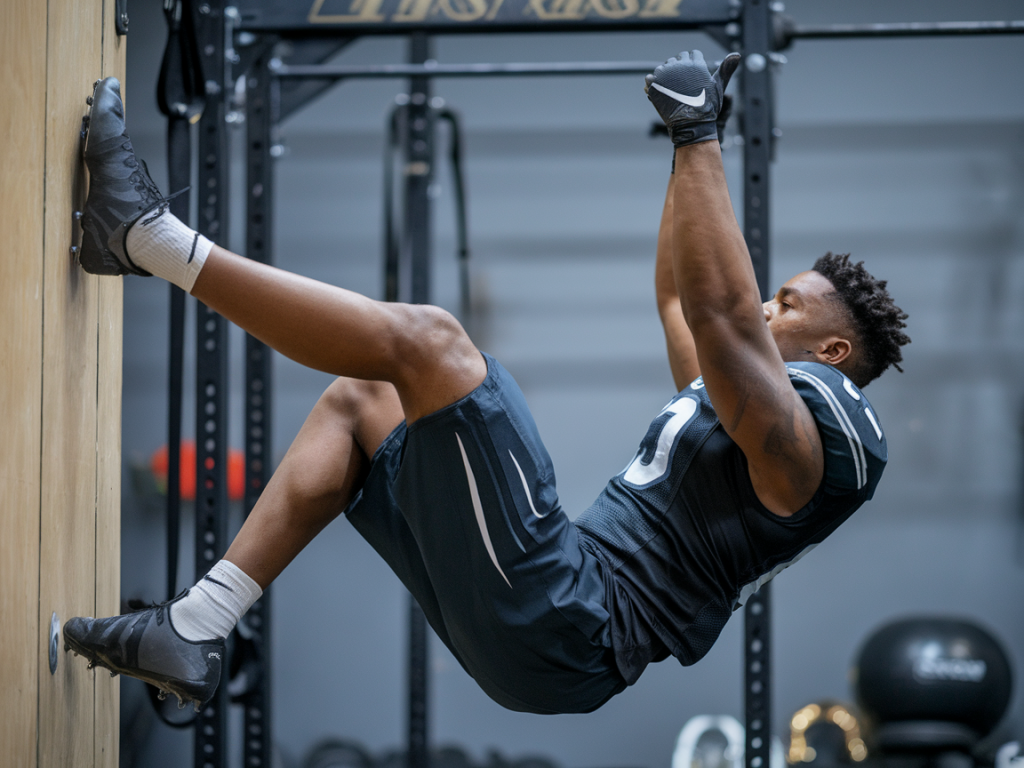
I hear the same question a lot from coaches and athletes: which strength exercises actually reduce hamstring injuries for sprinters and footballers? Over years on the pitch and in the gym I’ve tracked the exercises that move the needle—those backed by research and the ones that just feel right when you test them with players. Below I share what I use, why it works, and how I program these exercises so they’re practical for both sprint-focused athletes and footballers who need resilience through changing speeds and high contact.
Why strength matters for hamstring injury prevention
Hamstring strains are rarely just a flexibility issue. They show up because of force production and deceleration demands, poor eccentric capacity, glute weakness, or simply fatigue and poor coordination under load. Strength exercises that target eccentric control (muscle lengthening while producing force), hip extension power, and single-leg stability have the most impact on reducing risk. Research and my own coaching both point to one star exercise: the Nordic hamstring curl.
Evidence-backed exercises I rely on
Below are the exercises I use most, with practical notes on why they work:
- Nordic hamstring curl (eccentric focus) — The strongest evidence supports this exercise for reducing hamstring strain incidence. It trains maximal eccentric force, especially at long muscle lengths, mimicking late swing-phase demands in sprinting.
- Romanian deadlift (RDL) — Great for building hip-hinge strength and eccentric control through a loaded range. Useful for general posterior chain capacity and can be progressed with heavier loads.
- Single-leg Romanian deadlift — Adds unilateral control and balance, correcting side-to-side deficits common in footballers who favor one leg for kicking.
- Glute-ham raise (GHR) — Combines eccentric hamstring work with hip extension strength; effective but requires special equipment (Glute-Ham Developer or GHD).
- Hip thrusts — Targets hip extension power and glute strength which offloads the hamstrings. Useful in the early phase of rehab and for force production improvements.
- Split squats / Bulgarian split squats — Build single-leg strength and address asymmetries while loading the posterior chain in sport-specific postures.
- High-speed sprint-specific drills — Not a gym exercise, but maximal and submaximal sprints with technique coaching are essential to transfer strength to speed and reduce injury risk.
Programming: how to use these exercises effectively
Programming is where the gains happen or stall. The Nordic curl is the anchor for me, but it must be dosed properly.
- Nordic curls — frequency and volume: Start with 2 sessions per week. Early phase: 2–3 sets of 4–6 reps with assistance (bands or partner). Progress over 6–8 weeks to 3 sets of 6–8 slow eccentrics. Some programs use higher volumes (3x10) for maintenance during season. A conservative progression avoids DOMS that disrupts training.
- RDLs and single-leg RDLs: 1–2 times per week. RDLs 3–4 sets of 5–8 reps (heavier), single-leg variations 3 sets of 6–10 reps each side (control and balance).
- GHR and hip thrusts: GHRs 2–3 sets of 6–8 (if available); hip thrusts 3–4 sets of 6–10 for strength, or 10–15 for hypertrophy/conditioning phases.
- Integration with sprint work: Do heavy gym sessions when sprint volume is lower (e.g., non-practice days or early week). Maximal sprints should be sharp and technically coached, not after exhausting lifts.
- Periodisation across the season: Off-season: higher volume and maximal strength. Preseason: transition to power/sprint-specific strength. In-season: maintain with lower volume, keep Nordic curls for maintenance.
Progression examples (8-week block)
| Weeks | Nordic | RDL | Hip Thrust | Sprint work |
|---|---|---|---|---|
| 1–2 | 2x/week, 2–3x4 assisted | 2x/week, 3x6 light | 2x/week, 3x8 moderate | Technique + accel drills, 6–8 short runs |
| 3–5 | 2x/week, 3x6–8 slow eccentrics | 2x/week, 4x5 moderate–heavy | 1–2x/week, 3x6–8 heavy | Max speed reps (30–60m) 6–10 total, with full recovery |
| 6–8 | 2–3x/week, 3x6–10 (some unassisted) | 1–2x/week, 3x5 heavy | 1–2x/week, 3x5–8 | Speed endurance + small-sided games if football season starts |
Practical cues and common faults
- Nordic cue: “Sit back into your heels, resist with the hamstrings, and keep the hips tall.” Avoid a big hip hinge forward — you want the hamstrings lengthening under control.
- RDL cue: “Push the hips back, shins vertical, feel the tension in the hamstrings.” Keep a neutral spine and don’t let the knees collapse forward.
- Single-leg work: Use your arms for balance initially; focus on smooth eccentric control rather than big range-of-motion swings.
- Sprinting: Coach high knee recovery and ensure athletes are well-warmed. Fatigue and poor technique are big injury contributors.
Tools and equipment I recommend
You don’t need fancy kit but some tools help consistency:
- Nordic hamstring device or a partner + anchored pad (you can use a couch or bar). There are commercial attachments like the Nordic Hamstring Trainer that make set-up easier.
- Glute-Ham Developer (GHD) for GHRs — useful in strength-focused facilities.
- Barbell and kettlebells for RDLs and hip thrusts (a thick pad/roller for hips helps comfort).
- GPS or simple RPE tracking to monitor sprinting load and fatigue across the week.
Monitoring and individualisation
Watch for asymmetry in strength and sprint mechanics. If an athlete experiences recurring soreness or feels “tight” after a session, reduce eccentric volume for a week and prioritise recovery (sleep, nutrition, light aerobic work). For previous hamstring injuries, I introduce Nordic curls later in week one but keep the focus on graded eccentric exposure.
In practice, combining eccentric exercises (Nordic, GHR) with loaded hip-hinge work (RDLs) and sprint-specific drills gives the best protective effect. It’s not a single exercise but the right mix, dosed across a season, that builds hamstrings which are both strong and durable.