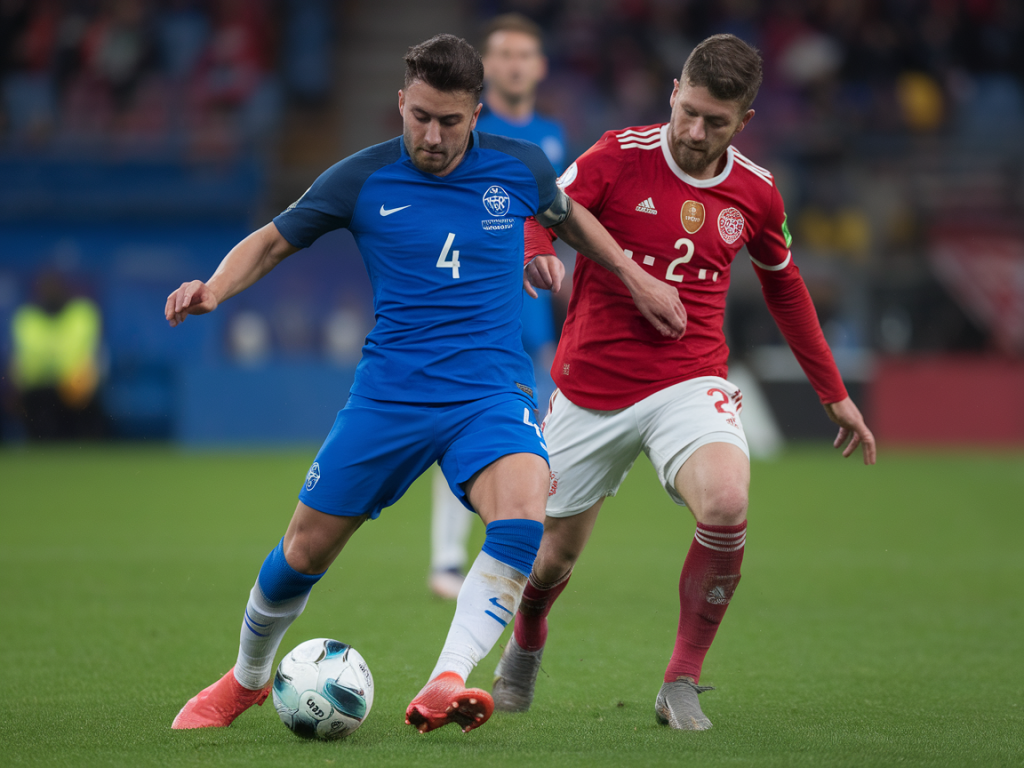
I’ve long considered the 4-2-3-1 one of the most practical shapes for lower-league clubs — it’s familiar to players, flexible in attack and defensively sound when set up properly. But several teams I work with still struggle to create clear-cut chances from it. That’s not because the formation is flawed; it’s because small, context-aware tweaks can unlock the rhythm, movement and overloads that turn possession into high-quality opportunities.
Why the 4-2-3-1 suits lower-league football — and where it commonly stalls
The 4-2-3-1 gives you a double pivot that protects space and builds play, plus a number 10 linking midfield and attack. For teams with limited training time, it’s straightforward to teach and offers defensive balance. But common issues I see are:
To get more chances, you don’t need a wholesale tactical revolution — you need purposeful tweaks that exploit typical lower-league vulnerabilities: slower positional rotations, less aggressive defensive pressing wide, and frequent man-oriented marking.
Core tweak 1 — Make the No.10 a roaming ‘connector’ rather than a fixed playmaker
Instead of instructing your 10 to live between the lines in a fixed pocket, I ask mine to become a roaming connector who drifts into half-spaces and occasionally occupies the left or right channel. This achieves three things:
Coaching point: practice two patterns — short diagonals into the winger’s feet and quick one-twos around the corner with the striker. Small-sided games (6v6 + neutrals) where the 10 must receive outside the box and instantly play a forward pass help replicate match rhythm.
Core tweak 2 — Use staggered double pivots: one creator, one carrier
Not all 4-2-3-1 pivots must mirror each other. I usually assign asymmetric roles:
This staggered approach forces opponents to make choices: close down the carrier and leave the playmaker time to switch the play, or sit deeper and allow the carrier space to progress. For lower-league teams who can’t rely on superior technical players, the carrier role often comes from the fitter, more dynamic midfielder rather than the most gifted passer.
Core tweak 3 — Train full-backs to become controlled vertical outlets
Full-backs can create overloads — but only if their forward runs are predictable and covered. I coach mine to follow a simple rule:
Drill: practice “full-back overlap sequences” in a 7v5 overload exercise where full-backs must receive under pressure and create a shot or cutback within five passes. Emphasise first touch direction and timing rather than 100% success rate.
Core tweak 4 — Use the striker as a horizontal mover, not purely a target man
Too often, lower-league sides expect the lone striker to hold and win everything. I reframe the role into three on-pitch actions:
Work on “drop-and-go” patterns in training. A striker who can drop, receive quickly and lay off a reverse pass will create clearer chances for inside forwards or an arriving 6B.
Core tweak 5 — Exploit half-spaces and quick switches
Opponents in lower leagues will often overcommit central bodies. Playing into half-spaces with quick horizontal switches is low-risk and high-reward. Encourage this sequence:
Repeat this in crossing and finishing drills — use a mannequin or small-sided defenders to simulate the half-space gaps. I find that training these rotations on both sides of the pitch increases familiarity and reduces hesitation in match situations.
Set-piece and transition tweaks that generate chances
Lower-league set-plays often decide matches. Here are simple, repeatable ideas:
Transition: when winning the ball in the opposition half, train an immediate “fast three” — striker, one winger, and 6B — to sprint in behind. Practicing a single forwards-only outlet encourages direct, high-quality counter opportunities.
Small-sided drills and conditioning — practical sessions I use
When time is short, sessions must be efficient. Here are drills I use to train the tweaks above:
Conditioning is specific: GPS data (Catapult or similar) helps in lower leagues too — if your club can use simple trackers, monitor high-speed meters for full-backs and the striker. If not, RPE and scheduled sprint sets (6 x 30m with 40s recovery) achieve similar fitness adaptations.
Common objections and how I answer them
“But our players aren’t technically gifted enough.” My response: football intelligence and timing often beat pure technique in lower leagues. Teaching decision-making patterns — when to carry, when to switch — reduces technical dependency.
“Won’t leaving a pivot free be risky?” Not if you coach cover principles and stagger roles. The key is training the pivot to occupy covering positions when full-backs advance and using compact defensive blocks during opponent counters.
Practical checklist before the next match
Implementing these tweaks won’t transform your team overnight, but they create clearer, repeatable patterns that make chance creation less random and more habitual. On the training ground I prefer small, high-repetition exercises that embed the rhythm — that’s where a modest tactical tweak becomes a real match-winning habit.