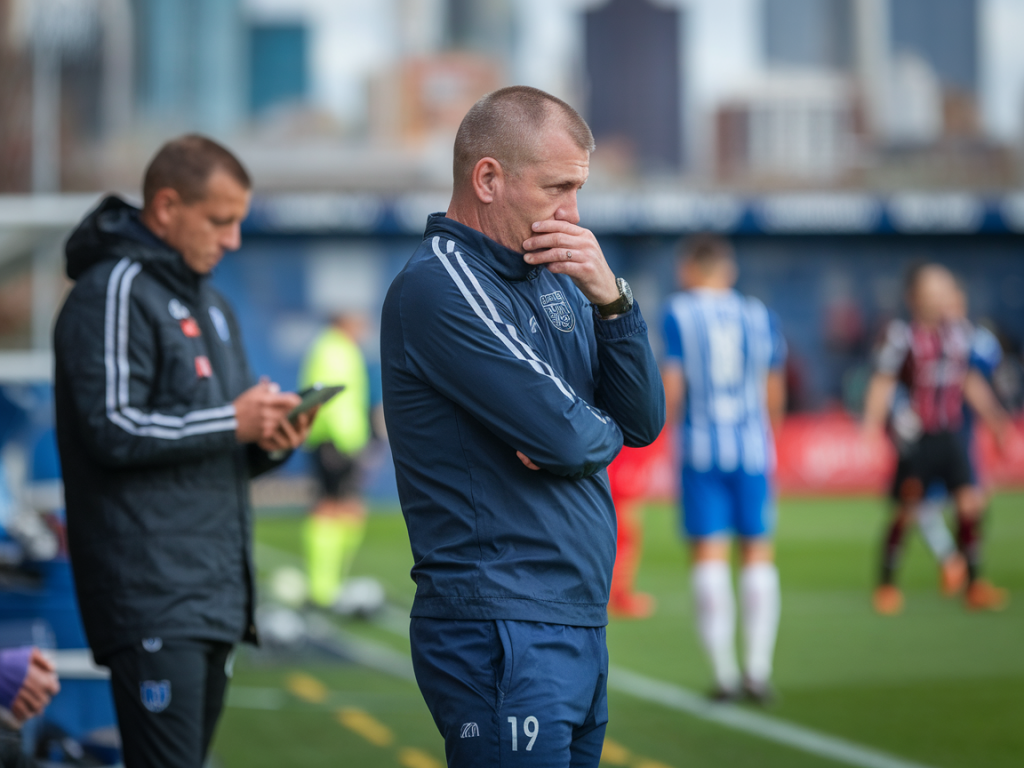
Opposition managers do more than fill a podium and tip their hat to the match officials. When I sit through post-match interviews — whether after a gritty lower-league 1–0 or a Champions League tactical chess match — I treat those 90 seconds of soundbites as free scouting intelligence. The language they use, the emphasis they place on certain moments, and the patterns they single out often reveal how they think the game was won or lost. And crucially, they often tell you exactly where your team is vulnerable.
Why post-match interviews matter
I’ve spent years on training pitches and in press boxes. What’s striking is how managers, having just watched 90 minutes of behaviour, will verbalise vulnerabilities in a way that video clips or cold stats sometimes don’t. They’ll highlight “transition problems”, criticise “lazy set-piece marking”, or praise a lone forward who “found pockets of space”. That's not PR-speak — it’s a coached perception of the match. They’re revealing, intentionally or not, where they saw gaps.
Those comments are useful for three reasons:
Common phrases and what they really mean
Over time I’ve built an internal glossary. When an opposing coach says certain phrases, I act. Here are a few translations from locker-room code to coaching action:
| Phrase | Coach’s intent | What it suggests about your team |
|---|---|---|
| “We exploited their transitions” | They targeted moments between phases | Slow recovery shape; midfield-to-defence moments vulnerable |
| “They struggled with the press” | They couldn’t build out under pressure | Poor ball-carrying from defence; limited passing lanes |
| “Set-pieces were decisive” | They scored/conceded from dead balls | Organisation, marking or zonal structures need work |
| “Their full-backs were isolated” | They attacked the flanks | Wide defensive coverage lacking; double-up opportunities |
How I convert soundbites into training plans
Hearing an opposition manager mention your team’s weakness is one thing; correcting it is another. I use a three-step approach: verify, prioritise, implement.
Verify
I don’t take a single quote at face value. First, I check the match footage to confirm the pattern. If the manager says “they were reckless on the break”, I watch 3–4 counter-attacking situations, noting who committed, where the gaps opened, and whether it was structure or individual error. I often tag these clips in a player-specific playlist using tools like Hudl or LongoMatch so I can show the players exact moments rather than abstract criticism.
Prioritise
Not every weakness needs addressing immediately. I prioritise by frequency and consequence. A recurring initiation error that leads to shots on goal or a set-piece breakdown that costs points gets top billing. Low-frequency issues with low consequence are scheduled for later work.
Implement
Implementation is practical. If an opponent praised our vulnerability in transitions, I’ll run conditioning-aware drills that rehearse recovery runs, situational rondos that simulate losing the ball, and small-sided games where scoring is only valid if the team recovers to a compact shape within 6 seconds. If the problem is set-pieces, we switch from simple repetition to scenario-based work: defend corners with different delivery types, assign clear roles, and record the session for players to see positional errors.
Tactical examples from real matches
Last season, after a 2–1 defeat, the opposing manager kept talking about our midfield “not sticking to the box-to-box”. On review, I saw our 8 and 6 dropping too deep when under pressure, leaving the space between defence and attack open for runners. The fix wasn’t simply telling them to “stay forward”. We altered midfield rotations, practiced shadow runs to hold positions, and introduced passing sequences that required the 8 and 6 to press higher for specified minutes of the game. Within three training weeks, our mid-block regained solidity.
Another time, a manager highlighted that our full-backs “got turned too easily on the overlap”. The solution combined technical drill work (1v1 defending on the touchline), tactical profiling (how and when to delay an overlap), and situational substitutions (bringing on a defensive-minded 6 to sit when the opponent switched to a wide overload). The mix of training, role clarity and match management closed that avenue.
What to do during the week after the interview
If you’re a coach, here’s a week template I use after an opponent’s public reveal:
Using language as a motivational tool
Sometimes the opposing manager’s comment is a psychological arrow rather than a tactical dossier. “We felt they bottled it” is often meant to intimidate. I use that to motivate. I show players the quote and make it an internal challenge: “Prove them wrong.” Framing the external narrative as fuel can be powerful — but only if it’s tied to clear tactical work so the response is more than emotion.
Practical tips for players and coaches
I publish these kinds of breakdowns regularly on Samsophsaints Co (https://www.samsophsaints.co.uk) because small observational details often become the difference between a clean sheet and a late equaliser. Post-match interviews are a free scouting resource — use them, interrogate them, and act on them. The manager across the room has just handed you a map of your vulnerabilities; your job is to convert that map into a route out of trouble.