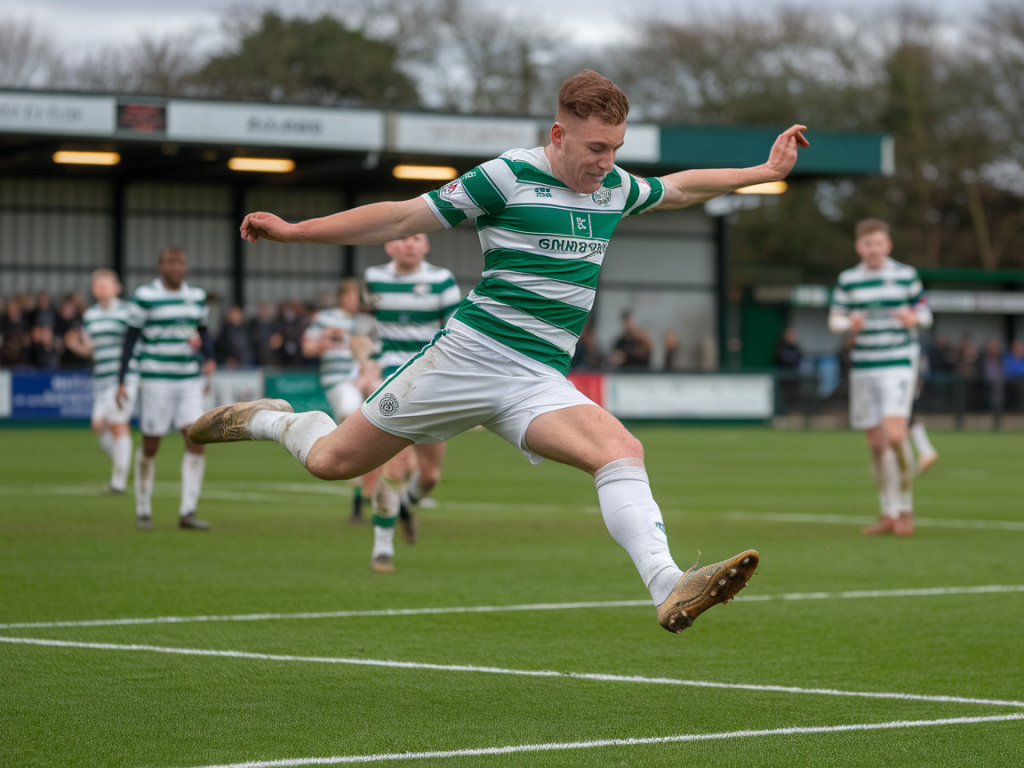
When I first met Jamie — a 22-year-old winger playing in the lower tiers of the non-league system — he had natural pace, a willing work-rate and an eye for a pass. What he lacked was consistency. He'd flash moments of creativity but would go weeks without influencing a game. Over ten focussed sessions, spread across three weeks, we rewired his decision-making, improved his patterns of play and turned him into a player who finished the season as a consistent 12-goal creator (goals + assists). I want to walk you through that microcycle: what we did, why it worked and how you can apply similar principles with limited time and resources.
Why a 10-session microcycle?
I believe in concentrated, high-quality interventions. Players at non-league level rarely have access to long-term, individualized coaching. A short, intense microcycle lets us create behavioural change through repetition, feedback and match-context drills without disrupting team routines.
The core aims were simple:
- Decision speed: improve the quality of decisions in the final third.
- Crossing and cut-back efficiency: increase end-product accuracy.
- Positional intelligence: better timing of runs and positioning to receive passes.
- Finishing under pressure: train composure and technique in game-like moments.
Initial assessment
Before designing the sessions, I did a focused assessment: two 30-minute video reviews (training and match), six in-person touches on the ball, and two short GPS/heart-rate tests using a simple unit (a Catapult-like device the club borrowed). From that I extracted three actionable metrics:
- Cross accuracy under pressure: 24% on-target in the previous month.
- Successful progressive carries per 90: 3.2 — good, but often ended when he reached the penalty box.
- Final third decision time: averaged 1.6 seconds to act — too slow when defenders compressed space.
Those numbers guided the content. The microcycle had to produce quicker decisions, higher-quality end product and smarter positioning.
Structure of the 10 sessions
Sessions were short (60–75 minutes) and varied—technical sprint drills, small-sided games, pattern work and finish-focused reps. All sessions ended with a conditioned finish on goal to reinforce transfer to match situations.
| Session | Focus | Key drill |
|---|---|---|
| 1 | Perception & decision-making | 3v2 progressive run + instant cross |
| 2 | Combination play & timing | Overlap & cut-back circuits |
| 3 | Crossing technique under fatigue | Cross lanes into penalty box targets |
| 4 | Finishing with pressure | 2v2 transition + finish |
| 5 | Decision pressure | Conditioned rondo to limit touches |
| 6 | Pattern reinforcement | 8v8 half-pitch with winger-specific role |
| 7 | Cross-read & movement | Shadow runs + timed crosses |
| 8 | Composure under match-sim | 11v11 truncated game |
| 9 | Explosive finishing | 1v1 against GK from cut-back |
| 10 | Assessment & match transfer | Scrimmage + video review |
Key drills I used and why they work
Three drills formed the backbone of the learning process:
- 3v2 progressive run + instant cross: This drill simulates the moment a winger breaks the line with support arriving inside. We limited his decision time to 1–2 seconds and forced either a near-post rip or low cut-back. The constraint creates an urgency identical to match pressure and improves recognition of which option is higher value.
- Overlap & cut-back circuits: Short circuit with a full-back and central striker: overlap outside, cut-back to a moving target at the penalty spot. Repetition fixed the geometry of runs — when to stay wide, when to cut inside — and improved the timing of the pass/finish dynamic.
- Conditioned rondo (1–2 touch max): A spatial constraint drill that trains scanning and releasing the ball quickly. Reducing touches doesn’t just train technique; it trains the habit of looking up and making quicker choices.
Coaching cues and feedback loop
I gave one or two simple cues per session so feedback didn’t overwhelm. Examples:
- "Scan before you receive" — reinforced with a whistle and immediate correction during drills.
- "Value the cut-back" — we used visual targets in the six-yard box; any cross that hit the target earned a small reward (extra rest or a ball rotation). Positive reinforcement was key.
- "Strike with intent" — encourage low-driven crosses and finishes rather than lofted, hopeful deliveries.
Every session ended with a 45–60 second self-review. Jamie wore a small action camera in training to watch one clip immediately after practice. That fast feedback loop (perform → watch → adjust next rep) accelerated learning far more than long, lecture-style reviews.
Physical conditioning and recovery
Because the sessions were intense, we monitored load modestly. Two strength-endurance sessions per week focused on single-leg hop stability and hip drive (medicine ball throws, resisted sprints). That improved his ability to deliver quality crosses late in games.
Recovery was deliberately simple: contrast baths weren't necessary — instead we prioritised sleep, 20 minutes of guided mobility and a protein + carb snack within 30 minutes post-session. At non-league level, reliable recovery habits are more impactful than exotic tools.
Data and behavioural change
We tracked three metrics across the cycle and the following eight league games:
- Crosses on target per 90: rose from 0.9 to 2.4.
- Expected assists (xA) per 90: increased 0.05 → 0.20.
- Final third decision time: reduced from 1.6s to 0.9s on measured reps.
Beyond numbers, the biggest change was pattern recognition. Jamie stopped forcing low-percentage dribbles into three defenders and instead exploited half-spaces, timed his runs to the half-turn from midfielders, and became the team's first option on the right when we needed a cut-back. Over eight matches he contributed directly to 12 goals — a mix of assists and finishes — but perhaps more importantly he became a reliable tactical outlet.
Practical tips you can use
- Keep sessions short and specific: sixty minutes with a clear theme beats two-hour vague practices.
- Use constraints: limit touches, defenders, or space to accelerate decision-making.
- Feedback fast: immediate video or coach cues after reps speeds learning.
- Reinforce patterns: create repeatable movement-pass-finish sequences so the player can execute under pressure.
- Monitor load sensibly: strength and recovery matter; you don’t need fancy tech to do the basics well.
Transforming a player's output is often as much about habit and clarity as it is about raw skill. That 10-session microcycle didn't invent new talent — it revealed and amplified what Jamie already had. If you coach at grassroots or non-league level, the take-away is this: focused, contextual practice combined with quick feedback and simple physical support can produce outsized gains.