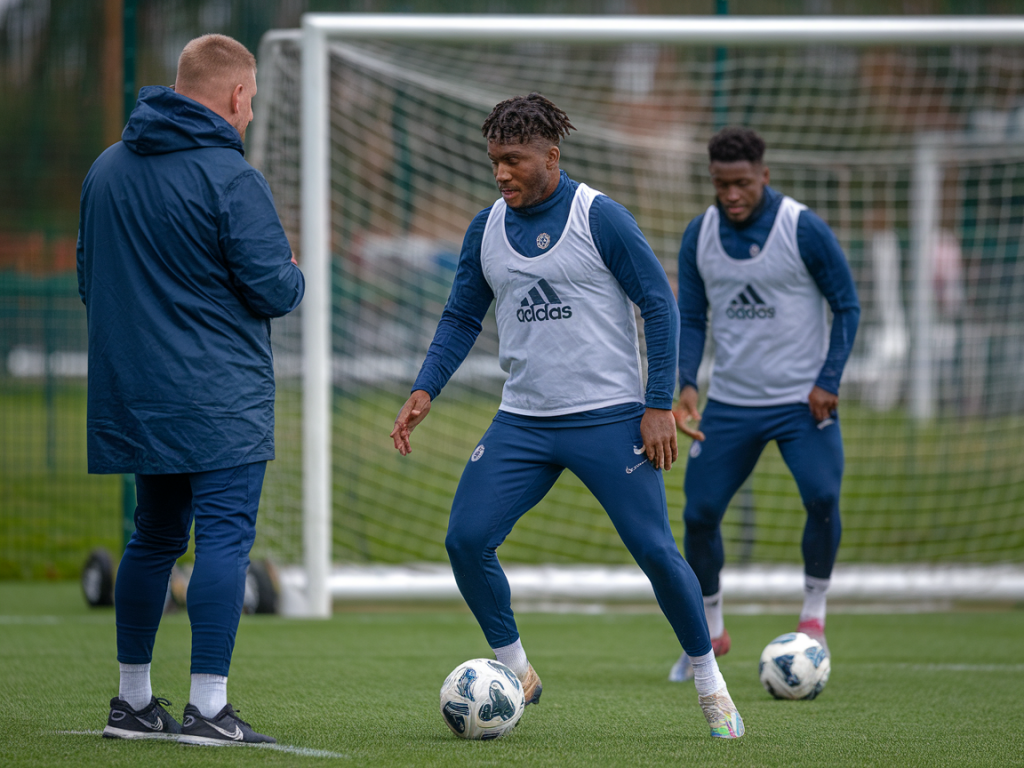
I’ve spent years on training grounds testing drills and reshaping players’ roles, and one of the most rewarding transitions I’ve worked on is converting a creative winger into an effective inside‑forward. It’s a modern position that blends wide creativity with central penetration and goal threat. In this piece I’ll walk you through three practical training sessions that will get a natural winger thinking, moving, and finishing like an inside‑forward — while keeping their creativity intact.
The mindset shift: what changes and why it matters
Before we touch cones or balls, there’s a tactical and mental rewire that needs to happen. A winger often values touchlines, isolating fullbacks, and crossing. An inside‑forward prioritises cutting inside to attack half‑spaces, link play with midfield, combine in central channels, and take higher quality shots.
Coaching cues I use early on:
“Smaller field, bigger angles” — encourage players to see central corridors as attack routes rather than threats to avoid.“Two‑touch forward” — speed up combinations to create central overloads.“Finish the move” — reward choices that end in shots or line‑breaking passes, not just successful dribbles.Players should understand that stepping inside doesn’t mean abandoning width: it creates options for overlapping fullbacks and invites midfield runners. The three sessions here are progressive — one to reorient movement and decision making, one to build combinations and penetration, and one to focus on finishing and match‑specific scenarios.
Session 1 — Orientation and half‑space awareness (60 minutes)
Objective: Teach the player to recognise and occupy half‑spaces, make purposeful diagonal runs, and play quick central combinations.
Warm-up (15 minutes)
Dynamic mobility and ladder work (5 minutes) — short accelerations emphasising inside‑foot drives.Passing triangle rondo (10 minutes) — 4v1 rondo but with outside players encouraged to step into the triangle and receive on the half‑turn. Use small goals or cones as targets.Main drill — Half‑space possession (20 minutes)
Set up a 30x20 yard grid split into three vertical channels: left channel (wing), central half‑space, and central lane.Play 6v6+2 neutrals (neutrals operate in the half‑space). The objective for attacking team is to progress the ball into the central lane or combine through the half‑space with a two‑touch combination.Coaching points: encourage the winger to take one or two touches to open their body and step inside on diagonal runs. Reward successful line‑breaking passes into the central lane with a point.Transition game — Triggered overlap (15 minutes)
Small pitch 5v5+2 (overs). When the winger receives on the half‑space, a trigger (coach whistle) allows an overlapping fullback to run. Attackers must create a goal opportunity within 6 seconds.Focus: timing of the inside run versus overlap, shoulder orientation to protect ball, and quick recognition of pass vs drive.Key feedback for players
“Open your shoulder to see the goal and the fullback.”“Use one heavy first touch to open lane; use second to shift defender.”Watch body shape: the inside‑forward should receive slightly rotated to keep options — shot or pass.Session 2 — Combinations, lines of play and pattern work (75 minutes)
Objective: Develop penetrating combinations and practiced movement patterns an inside‑forward uses in match situations.
Warm-up (15 minutes)
Reactive passing with finishing (4 cones form a diamond, player in middle must receive, turn and play to next cone under coach call).Pattern play circuit (30 minutes)
Set up three stations, 12 minutes each, rotating players through:Station A — “Inside switch”: winger starts wide, drifts inside to combine with #8, plays a wall pass, then receives beyond the defensive line and finishes. Emphasise timing and weight of pass.Station B — “Diagonal run & finish”: winger cuts inside opposite foot, receives through ball from central midfielder and shoots from 10–16 yards. Vary with one‑touch finishes.Station C — “Pivot & feed”: winger acts as the first line to link takeaways — quick pivot to lay off for overlapping FB or play back to midfielder arriving late into box.Conditioned small‑sided game — Two‑touch penetration (20 minutes)
6v6 on 40x30 yard pitch. Teams score by completing a pass to a wide target player after a central penetrating combination OR by scoring a shot inside the box. Two‑touch max for attackers; defenders free on touches.Coaching emphasis: encourage vertical runs from the winger into half‑spaces to draw defenders and create depth; reward passes that split lines.Video review (10 minutes)
Show 2‑3 clips from the session — good inside runs, poor timings, and examples of successful link play. Visual feedback accelerates learning.Session 3 — Match scenarios, finishing and decision pressure (80 minutes)
Objective: Translate practice into match‑like moments: 1v1s inside the half‑space, running beyond defenders, and becoming a consistent scoring option.
Warm-up (10 minutes)
Finishing circuit: close‑range shots, one‑touch finishing, and chip finishes. Use rebounder for unpredictable returns (equipment: SKLZ rebounder or any rebound net).Cognitive 1v1 inside‑space drill (20 minutes)
Set up a 12x18 yard channel. Defender starts in front; attacker starts wide and is allowed to enter channel after a touch. The attacker must beat the defender inside the channel and either shoot or make the final pass to a mini‑goal behind defender. Rotate defenders often.Focus: use of body feints, cutbacks onto stronger foot, and finishing under pressure.Scenario game — Edge of the box overloads (30 minutes)
Create a half‑pitch game where attacking team has 6 players (including the converted inside‑forward) vs 5 defenders. Attacking goal is protected by a goalkeeper. Attacking team must play through the half‑space or score from a shot following a central combination to get 3 points; a long cross or wide‑only attack gets 1 point.Add time pressure (10 seconds after entering final third) to simulate real match urgency.Cool‑down and targeted feedback (20 minutes)
Stretch and then a 1:1 chat with the player. Give them two things to keep working on and one thing they did well. Keep feedback actionable: “Next week, take one more touch to open before your shot” or “Keep that knee over the ball when finishing.”Progress tracking and metrics
To know if the conversion is working, track simple metrics over matches and training:
Touches in the final third (increase indicates central involvement).Shots per 90 and shot locations (more shots from central channels is good).Key passes/through balls from the half‑space.Successful take‑ons when cutting inside vs outside runs.| Metric | Target (4–8 weeks) |
|---|
| Touches inside final third | +15–25% |
| Shots from inside the box/central 18yds | +0.5–1.0 per 90 |
| Key passes from half‑space | +0.3–0.6 per 90 |
Use simple tools like CoachNow, Hudl, or even a phone to record drills and track these stats weekly. I’ve found that players appreciate seeing tangible progress — it reinforces the new behaviours.
Common mistakes and quick fixes
Here are recurring issues I see and how to correct them quickly:
Player keeps hugging the touchline — fix: impose a rule in training where a point is lost if the winger enters the final third outside the half‑space.Rushed decisions in the central channel — fix: practice 2v1s with time pressure reduced at first, then increased.Poor shot selection — fix: finishing under decision scenarios (e.g. must shoot within two touches after receiving in the half‑space).This progression — orientation, pattern play, and match scenarios — converts a natural winger’s instincts into inside‑forward instincts while preserving their creativity. Keep sessions short, purposeful, and measurable. When a player begins to choose the central option as instinct rather than instruction, you’ll see not just a change in position, but a new weapon for your team.