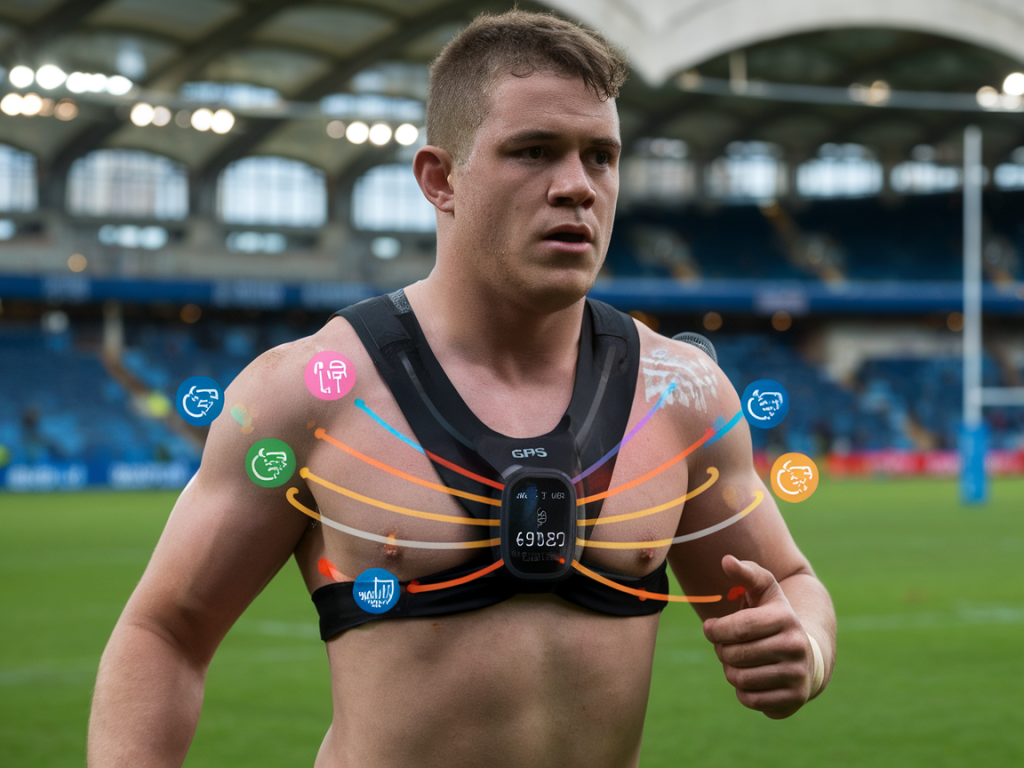
I want to tackle a question I get asked a lot when working with backs at club level: which GPS metrics actually predict soft‑tissue relapse, and what simple, twice‑weekly interventions can I use to reduce that risk? Over the last few seasons, combining on‑pitch GPS data with injury tracking in the teams I coach has given me a pragmatic sense of which numbers matter and how to act on them without overhauling the whole programme.
Which GPS metrics are most informative for soft‑tissue relapse
Not all GPS outputs are equal when it comes to predicting muscle strains and soft‑tissue problems in backs. I focus on a small cluster of metrics that consistently show up before relapses:
Devices and platforms I use to track these include Catapult and STATSports for GPS outputs, and simpler units can still provide the key HSR/sprint/accel counts you need. The metrics above are more predictive when combined with subjective data — sleep, soreness, and player confidence to sprint.
How I interpret the numbers — practical thresholds and red flags
Absolute thresholds vary by club and player, but the following patterns are my red flags:
| Metric | Risk direction | Coaching action |
| HSR / Sprint distance | Spikes ↑ risk | Limit acute increases; progressive loading |
| Top speed exposures | Low exposures ↑ risk | Include controlled near‑max sprints |
| Accelerations/Decelerations | Decel spikes ↑ risk | Train decel technique + eccentric strength |
| RHIE | High counts with low conditioning ↑ risk | Repeat‑effort conditioning |
| ACWR (HSR) | Acute > Chronic ↑ risk | Keep steady progression; avoid jumps |
The two twice‑weekly interventions I use
I keep the on‑field plan simple: one strength‑dominated session and one speed/exposure + soft‑tissue management session each week. Done correctly, these two interventions reduce relapse rates noticeably.
Intervention A — Eccentric strength session (once per week)
Why: Eccentric capacity is the single strongest modifiable factor to reduce posterior chain relapses. It improves resilience during decelerations and high‑speed running.
Session design: 20–30 minutes after warm‑up, heavy but low volume (quality over quantity). I aim for high muscle tension and controlled tempo rather than high rep endurance. Progress load across 3–6 weeks and monitor soreness and sprint performance the following 48 hours.
Intervention B — Speed exposure + targeted recovery (once per week)
Why: Players need regular rehearsal of near‑maximal speed and practice deceleration mechanics in a low‑fatigue environment. Coupling that with active soft‑tissue and mobility work helps manage accumulated muscle tension and reduces scar tissue tightness.
I sometimes use a light clinician‑led manual therapy session or a TENs/contrast‑water protocol for players returning from tightness. Tools like Normatec boots are helpful when available, and regular use of Compex or electrical stimulation for eccentric priming can be useful in higher‑level setups.
How I monitor effectiveness and tweak the plan
Implementing the two weekly interventions is only half the job — you need to monitor. I track the following each week:
If I see persistent soreness, declining top‑speed outputs, or repeated spikes in HSR without adaptation, I reduce acute session volumes, re‑prioritise the eccentric session and increase monitored top‑speed rehearsals at lower total volume. If GPS shows players under‑exposed to speed (low top speed exposures), I keep intervention B but lower volume and increase quality of exposures.
Finally, communication is everything. I share the simple GPS red flags with players and coaches through brief weekly notes and use the domain of practice — sprint rehearsals are not optional, they are prevention. On Samsophsaints Co I write a lot about how practical, data‑informed adjustments beat overcomplicated protocols. Two focused sessions per week — one eccentrics, one speed & recovery — give backs the best chance of staying available and staying fast.