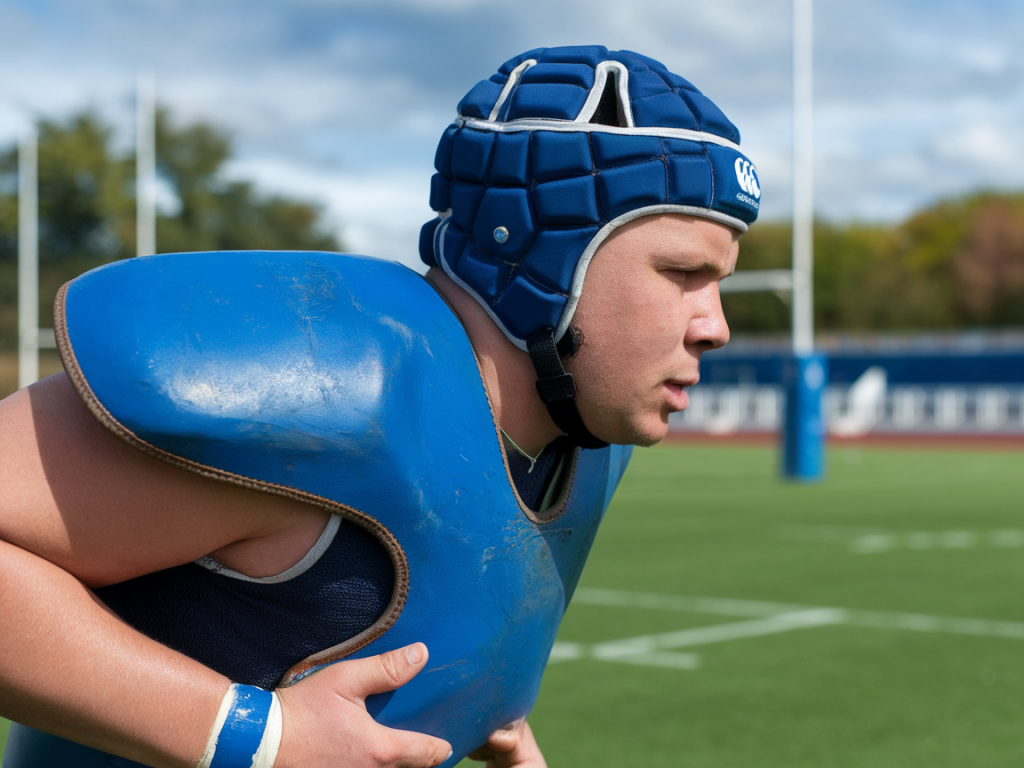
I remember the first time I had to design a return-to-play plan for a semi-pro back coming off a shoulder and hamstring combo injury — the sort that makes coaches nervous and players impatient. Over the years I've learned that returning a back to full contact isn't about ticking boxes in a rehab app; it's about layering confidence, objective data and sport-specific contact exposure so the player is ready physically and mentally. Below I share a practical, contact-focused framework I use at Samsophsaints Co and with local teams, designed to halve reinjury risk compared with hasty or contact-light RTPs.
Why "contact-ready" matters for backs
Backs live by speed, change of direction and high-speed collisions. You can restore strength and running metrics in the gym and on the grass, but if you haven't systematically reintroduced full-speed shoulder impacts, tackle technique under fatigue, and reactive decision-making under pressure, the player remains vulnerable. Reintegration into contact should be progressive, measurable and contextually relevant — not an afterthought on the first full-contact session.
Principles that guide my plans
- Progressive overload for contact — start with low-intensity, predictable contact and build to unpredictable, high-intensity collisions.
- Objective criteria, not fixed timelines — use strength benchmarks, asymmetry thresholds and on-field metrics to decide progression.
- Specificity — replicate positional tasks: side-on shoulder charges, open-field tackles, 1v1 carry-and-contact, and multi-phase defensive lines.
- Fatigue management — test contact under fatigue to reveal technique breakdowns and higher injury risk.
- Mental exposure — graded reintroduction to the sensory and cognitive stressors of contact (noise, crowd, split-second decisions).
Four-phase contact-ready RTP framework
I break the RTP into four phases: Preparation, Controlled Contact, Reactive Contact, and Match Prep. Each phase has physical benchmarks, contact drills, monitoring metrics and typical durations — but remember: progress when criteria are met, not based on days.
Phase 1 — Preparation (movement, load and tolerance)
Goal: restore baseline running load, strength and painless contact tolerance.
- Strength: bilateral and unilateral strength tests — e.g., single-leg RDL, isometric mid-thigh pull or a 3RM squat equivalent. Aim for ≥90% of pre-injury performance and limb symmetry index (LSI) >90%.
- Power: horizontal sprint tests and horizontal hop testing; target ≥95% of pre-injury sprint speed for distances up to 10–20m.
- Contact tolerance: submaximal contact with pads — simulated bag hits at controlled speeds to the injured area to re-establish tissue tolerance and pain-free movement.
- Monitoring: GPS/accelerometer for sprint distance and top speed; session RPE; pain scores (0–10) immediately and 24/48h post-session.
- Typical length: 1–2 weeks, depending on baseline data.
Phase 2 — Controlled Contact (technical focus)
Goal: rebuild contact technique and confidence in a controlled environment.
- Drills:
- Controlled front-on bag hits at game speeds (player approaches at 70–80% speed).
- Partner-based standing tackles from static and slow-moving leads — focus on body shape and bracing rather than impact outcome.
- Shoulder-targeted progressive loading with contact shields — increase mass and velocity across sessions.
- Technical coaching: video feedback using simple phone video or V1Pro — correct head position, torso bracing, and contact angle.
- Metrics: no increase in pain, LSI maintained, coach-rated contact technique score ≥80% (use a simple 5-point checklist).
- Typical length: 1–2 weeks (could be longer if technique deficits appear).
Phase 3 — Reactive Contact (speed, unpredictability, fatigue)
Goal: expose the player to unpredictable high-speed contact in game-like scenarios and under fatigue.
- Drills:
- 2v1 and 3v2 contact games where the injured player must carry through traffic or make last-ditch tackles.
- Open-field tackle drills at full speed with live ball (progress from static to dynamic defenders).
- Fatigue-based tackling: perform 5–10 minute high-intensity shuttle sets followed immediately by contact repetitions to test technique under stress.
- Monitoring:
- GPS metrics: sprint count, sprint distance, max speed. Compare to match baseline — aim for ≥80% of match sprint load before full return.
- Force platform or smartphone jump tests pre/post-session to detect neuromuscular fatigue asymmetries.
- Match-simulation contact count: progressively reach at least 50–70% of a typical match contact exposures for that position.
- Decision gate: if technique deteriorates under fatigue or pain spikes, regress one stage and address deficits.
Phase 4 — Match Preparation (integration and risk management)
Goal: prepare the player for the unpredictable environment of match play while minimising reinjury risk.
- Gradual game minutes: reintroduce 10–20 minute blocks of match play, ideally in lower-stakes fixtures (reserve matches, friendlies).
- Role modification: manage involvement in high-risk contact early on (e.g., reduce carries into traffic or limit high-frequency tackling until fully acclimatised).
- Load tapering: ensure the player arrives at the match fresh; manipulate training load 48–72 hours pre-game.
- Monitoring: post-match wellness questionnaire, targeted screen for pain or range-of-motion loss, and objective tracking of contact counts.
- Typical length: first two competitive return games used as progressive trials.
Objective criteria I insist on before full clearance
- Strength LSI ≥ 95% (for unilateral measures relevant to the injury).
- Pain score ≤1 during and 24h after high-intensity contact drills.
- Capability to tolerate ≥70% of position-specific contact exposures and ≥80% of sprint profile versus pre-injury match data.
- Coach and player agree — player reports confidence in their body and skill execution under pressure.
Practical drills I use and trust
- Modified "ring tackle" — player must receive a pass in a small 10m area and make a low-risk carry into a padded ring; gradually reduce padding and increase entry speed.
- Open-field wrap-and-ride — an attacker is wrapped by a defender who aims to stop him with a padded tackle; attacker practices falling and offloading under contact.
- Fatigue + tackle circuit — 6 × (20m shuttle + submax tackle on shield) to expose technique breakdowns.
- Partner resisted sprints into contact using a harness or heavy resistance band to simulate body-on-body collision.
Tools and tech that make this easier
- GPS units (Catapult, Polar TeamPro) — to compare sprint and contact load to pre-injury match data.
- Force platforms or jump testing apps (MyJump) — to quantify neuromuscular readiness and fatigue.
- High-frame-rate video (even a phone at 120fps) — for technical feedback and measurable improvements.
- Contact equipment: tackle bags, shields and foam pads from brands like Rhino or Gilbert — useful for progressive loading.
Communication and culture — the often-missed piece
Designing the plan is only half the job. You need alignment between player, coaching staff, physio and strength & conditioning. I run short "RTP huddles" before and after key sessions to ensure everyone understands the objective and red flags. Empower the player: ask them to self-report confidence and soreness, and teach them to recognise technique slips that raise their reinjury risk.
Common pitfalls and how I avoid them
- Rushing to full training after unilateral strength gaps — fix the asymmetry first with targeted unilateral strength and neuromuscular control work.
- Neglecting fatigue — test technique after conditioning sessions, not only when fresh.
- Poor data use — collect simple, reliable metrics and use them to make decisions (speed, sprint count, pain scores), instead of chasing complex models you don't understand.
- Overprotecting the player from contact — graded exposure builds tissue tolerance and psychological readiness; avoidance increases reinjury risk when contact inevitably returns.
If you want, I can share a printable checklist or a session plan template I use with semi-pro backs that includes drill progressions, objective gates and monitoring fields. Drop a note through the contact page at https://www.samsophsaints.co.uk — I'm always happy to collaborate with coaches and players to adapt the framework to your squad's resources and competition calendar.