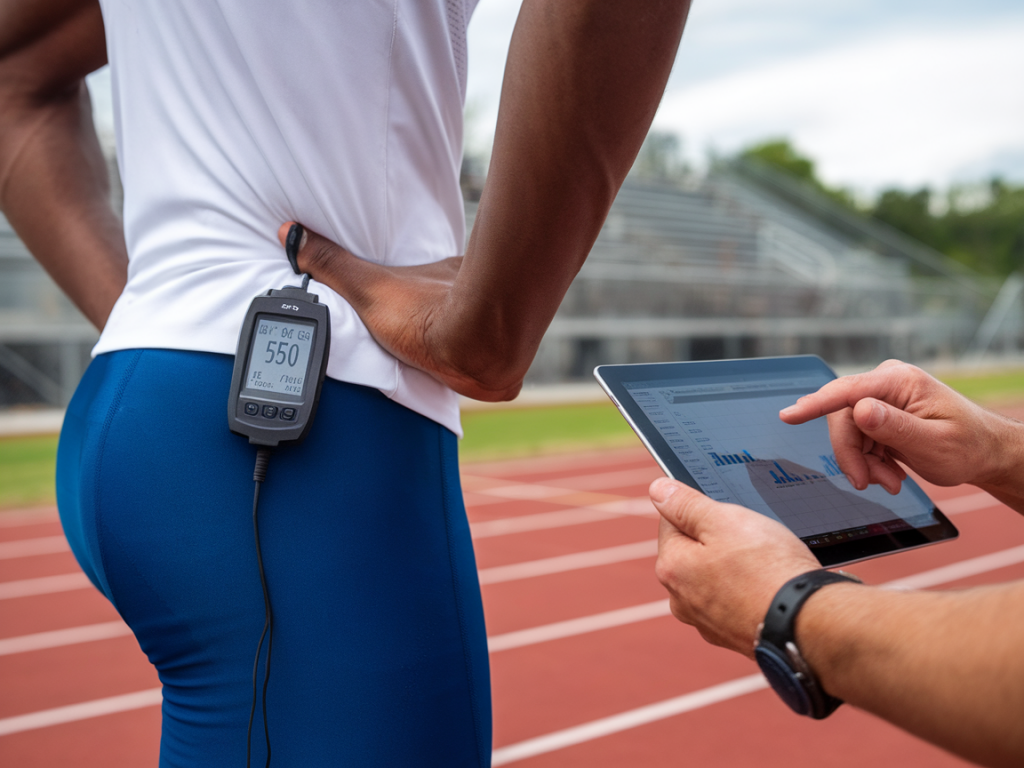
scouts, coaches and part-time analysts ask me this all the time: can a sub-£300 GPS unit realistically replicate the sprint outputs you get from a Catapult or STATSports system when evaluating semi-pro talent? Short answer: sometimes — for some measures, in controlled conditions, and with the right protocols. Longer answer: there are important caveats. Below I walk through the technical differences, what you can trust, how to set up tests so cheaper units are useful, and practical tips for interpreting the data.
What's different between a £300 GPS and a Catapult-style system?
High-end microtechnology systems like Catapult or STATSports are designed for elite teams. They typically combine higher GPS sampling rates, multi-constellation GNSS, and high-quality inertial measurement units (IMUs) — accelerometers, gyroscopes and magnetometers — plus robust firmware and validated algorithms for detecting accelerations, decelerations, and player load.
By contrast, many consumer units in the ~£200–£350 bracket (running watches, basic GPS pods, chest straps with GPS) prioritise battery life, battery-friendly sampling and general running metrics rather than the high-resolution, team-sports algorithms used by wearables built for football/rugby. The technical differences you need to know:
- Sampling frequency: Entry-to-mid-level units often sample GPS at 1–10 Hz; elite devices generally use 10–18+ Hz or fuse multiple sensors. Higher frequency improves accuracy for short sprints and rapid changes of speed.
- IMU quality and algorithm: Catapult-level units have validated sensor fusion algorithms tuned for team sports; cheap units either lack an IMU or use a low-spec one with less sophisticated processing.
- GNSS constellations: More expensive units use GPS + GLONASS + Galileo, improving positional accuracy and reducing satellite dropout. Cheaper units may use GPS only or have less reliable multi-GNSS support.
- Firmware and post-processing: Elite systems include post-game filtering and event detection; consumer devices may present rawer data with greater noise.
Which sprint outputs can a £300 unit approximate?
In my experience, and from practical testing on training grounds, a sub-£300 unit can give you usable data for:
- Peak speed — especially for longer sprints (20–40m). If you do straight-line sprints on a clear pitch with good satellite reception, peak speed estimates are often within ~0.2–0.4 m/s of elite units.
- Split times over longer intervals (10m, 20m) — provided you use a consistent run protocol and sync times carefully.
- Total high-speed distance — for broader categories (e.g. distance > 18 km/h) the unit can give a reasonable ballpark, though short burst counts will be noisy.
But be cautious with:
- Short acceleration metrics (0–5m, 0–10m) — these are highly sensitive to sampling rate and IMU quality. Cheap units often under- or over-estimate peak accelerations.
- Number of high-intensity efforts and very short sprint counts — may be inconsistent due to smoothing algorithms and GPS noise.
- Change-of-direction acceleration — GPS inherently struggles with lateral rapid movement; IMU quality becomes critical here.
How to set tests so your cheap GPS becomes a useful scouting tool
You don’t need elite hardware to separate a fast semi-pro from a merely quick one — you need good protocol and consistent methods. Here’s how I run it when I only have budget tech available:
- Use straight-line sprints of 20–40m in an open area with a clear view of the sky. Longer sprints reduce relative GPS error.
- Run multiple trials (3–5) and use the best or average value rather than a single run.
- Place the device consistently. If it’s a vest or pod, wear it in the same pocket/position each time; if it’s a watch, note the potential for arm movement to skew results.
- Record video (smartphone) to time-sync runs. Video gives you an independent split/timing reference you can use to validate or correct GPS-derived times.
- Compare relative differences rather than absolute numbers. If two players differ by 10–12% in peak speed according to your unit, that’s probably a true gap.
- Control environmental factors: avoid tree cover, tall stands, or heavy cloud and ensure multiple satellite fix before starting.
Practical comparison table (typical capabilities)
| Metric | Cheap GPS (~£200–£300) | Elite Catapult-style |
|---|---|---|
| Sampling frequency | 1–10 Hz | 10–18+ Hz (sensor fusion) |
| Peak speed accuracy (20–40m) | Reasonable (±0.2–0.5 m/s) | High (±0.1–0.2 m/s) |
| Short acceleration (0–5m) | Poor to moderate | Accurate |
| High-intensity efforts count | Noisy | Reliable |
| Change-of-direction metrics | Unreliable | Good |
Devices and pragmatic choices
If you’re on a tight budget, consider where the unit will be used. Running watches like certain Garmin Forerunner models or Polar Vantage devices can sit near the £300 mark and deliver solid peak speed and distance data for straight-line tests. Footpods (Stryd) are excellent for consistent running power and pace but need careful interpretation for short sprints and team-sport motion. Cheap GPS-only pods are okay if you focus on longer sprints and overall high-speed distance.
I wouldn’t recommend relying on a £300 unit alone for scout-level selection decisions that hinge on millisecond splits or subtle acceleration profiles. Instead, use them as part of a toolkit: combine GPS data with field testing (timing gates if you can borrow them), video, and coach observation.
Data cleaning and interpretation tips
Cheap GPS data often needs cleaning. Here are practical steps I use:
- Discard runs with obvious satellite dropouts or inconsistent traces (sharp spikes or zero-value points).
- Smooth the speed trace with a small moving average window to reduce noise, but don’t over-smooth — you’ll flatten true peaks.
- Validate peak speed visually against video. If GPS peak shows unrealistic spikes, rely on video-timed splits.
- Report ranges and confidence: e.g., “Peak speed: 8.9–9.2 m/s across three trials” instead of a single figure.
How scouts should use the numbers
When I brief scouts or coaches, I emphasise context. Use GPS outputs to answer practical scouting questions:
- Is this player consistently in the top speed quartile of the trial group?
- Does the player reach game-relevant speeds and sustain them over 20–40m?
- Do physical results match match-day observations (does a ‘fast-looking’ player actually log higher peak speeds)?
Numbers are a prompt, not a verdict. A £300 device can flag suspiciously slow or exceptionally fast performers — both useful for semi-pro recruitment. For borderline cases, follow-up with timing gates, a higher-spec loan unit, or an on-pitch trial.
If you want, I can draft a simple 20–40m testing protocol you can run with a £300 GPS unit and a smartphone for video sync — I use that setup all the time with local teams and it’s pragmatic, repeatable and actionable for semi-pro scouting.