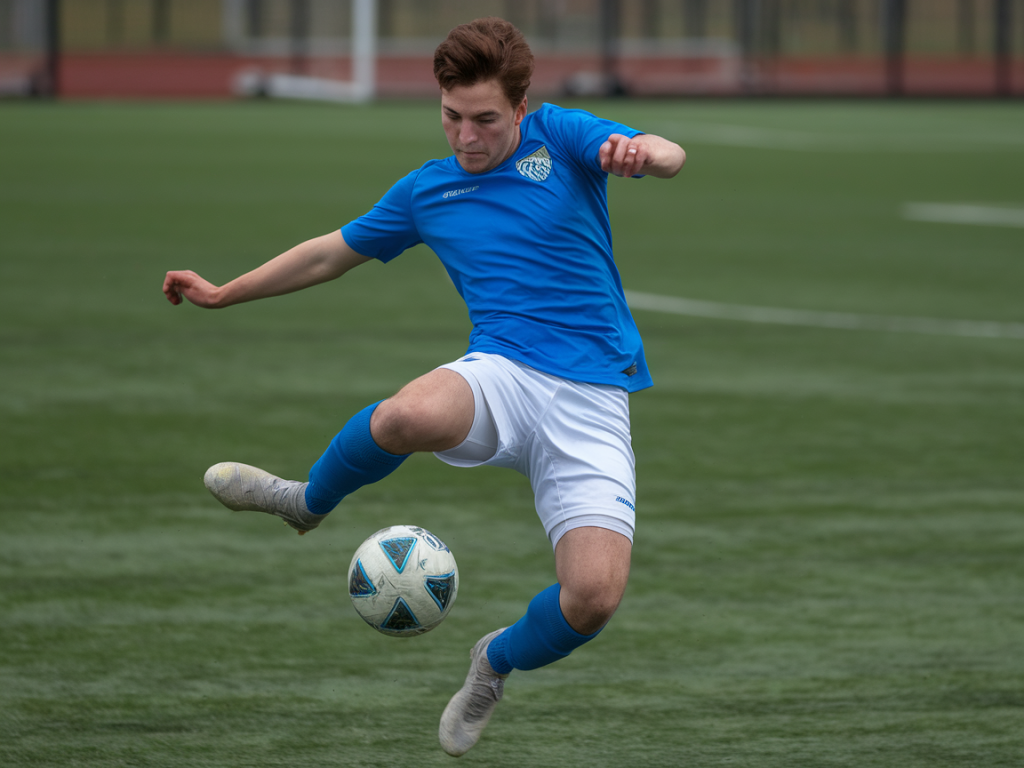
I remember a wide midfielder I worked with last season — electric on the flank, brilliant at beating his full-back, but invisible when the ball needed to be played through the midfield. Scouts kept asking, "Can he play centrally?" The honest answer was: not yet. Over two intense weeks we redesigned his technical microcycle to develop the specific skills and decision-making that make a creative wide player into a reliable number 10 for lower-league scouts. Below I lay out the practical plan, the rationale behind each session, and the tests I used to measure progress.
Why two weeks?
Two weeks isn't magic; it's focused, high-quality repetition with purposeful constraints. In my experience, you can meaningfully alter a player's technical habits and their perception-action coupling in 10–14 days when training load, specificity and feedback are dialled in. Scouts in lower leagues look for immediate impact and consistency rather than long-term potential alone — so the goal of this microcycle is to create dependable outcomes under match-like pressure.
Key attributes we targeted
- Receiving under pressure — first touch that opens the body to play forward or turn inside.
- Short rotational passing — 1–2 combinations and quick triangles through congested areas.
- Through-ball execution — timing, weight and angle to split lower-league backlines.
- Shot selection and finishing — efficient shooting from the edge of the box.
- Scanning and decision speed — reduce dwell time; choose sooner, better.
- Positional discipline — occupy pockets between opposition lines and manage pressing triggers.
Structure of the microcycle
Two weeks, 6 training days per week with one recovery day mid-cycle. Each day has a specific focus, but every session includes technical reps, conditioned game scenarios, and a short decision-making drill. Load was managed by controlling sprint volumes and high-intensity runs; sessions were ~90 minutes on non-recovery days, ~60 minutes on the lighter day.
| Day | Focus | Main drill |
|---|---|---|
| 1 | Receiving & orientation | Open-receive rondo with directional exit |
| 2 | Short combinations | 3v2 half-pitch breakouts |
| 3 | Through balls | Layered passing to forward runs |
| 4 | Finishing & link play | Edge-of-box finishing circuit |
| 5 | Game scenarios | 11v11 positional phase with number 10 role constraints |
| 6 | Recovery & video | Low-intensity ball work + feedback |
Sample session breakdown (Day 1: Receiving & Orientation)
This is a session I used on Day 1 to re-pattern first touch and scanning.
- Warm-up (15 min): Dynamic mobility, 5-min technical warm-up with progressive passing, and 5-min scanning drill (player receives, turns head for 2 seconds to identify targets before controlling).
- Technical block (25 min): 6v2 rondo with two directional doors. The target (our future 10) must always receive with an open body or use an intentional first touch into space. Scoring for successful completion: +1 for one-touch exits, +2 for receiving and turning to create passage. Use rebounders or a wall to focus on weight of first touch. Reps: 6 x 4 minutes, 90s rest.
- Conditioned pattern (20 min): 7v7 in half-pitch. Wide midfielder starts on wing but after two touches must move into the central zone to receive and combine. This forces scanning before possession and introduces spatial discipline.
- Small-sided finishing (20 min): 5v5 with central zone bonus — any goal initiated by the converted number 10 (assist or shot) counts double. Focus is on transitional movement and delivering quick passes into the final third.
- Debrief (10 min): Video of key reps using a phone or Hudl; immediate feedback on first touch direction and scanning.
Progressions for through-balls and vision
Through balls are as much about perception as execution. I used a three-step progression over Days 3 and 4:
- Step 1 — static through-ball accuracy: 10m–25m passes into pockets with mannequins or cones representing defenders. Focus on weight and angle.
- Step 2 — motion receivers: switching to moving target runs, emphasizing timing. Use a goalkeeper or an attacker making curved runs to simulate lower-league centre-forwards.
- Step 3 — pressured through-balls in 8v8: restrict the number 10 to two touches and require forward-penetrating pass attempts be played inside the last third. Artificial pressure shortens decision time.
Decision-speed drills I swear by
- Choice gates: Two weighted gates appear (left/right) and the 10 must choose one within 2 seconds of receiving. I signal with coloured cones or a coach’s arm. This simulates the limited options in competitive matches.
- Forced 1v1 split: A midfielder receives between lines, can either dribble into a split channel or play a through pass. Each trial is timed and graded for quality. Pressure increases over reps.
- Pattern recognition warm-ups: Quick clips of opponent defensive shapes (5–8s) flashed before a drill so the player must choose the correct pass type from memory and context.
Measuring progress — what I tracked
Objective data helps convince scouts. I used simple, reproducible metrics:
- Successful progressive passes per 90 in practice games (target +2 from baseline).
- First-touch quality score on 30 test receptions: 0 (bad), 1 (adequate), 2 (good — body open to play forward).
- Through-ball success rate from the central third in conditioned games.
- Decision time: time between ball arrival and pass execution in drills (goal: reduce by ~20-30%).
- Shot conversion from the edge of the box in finishing circuit.
Video and feedback loop
I recorded short clips each day and reviewed the best and worst plays with the player for 10–12 minutes. The feedback loop was simple: 1) identify the cue (what they saw), 2) decision made, 3) alternative choice. We used Hudl for clip storage; a cheaper option is Coach's Eye or simple smartphone footage uploaded to Google Drive.
Load management and recovery
Technical intensity was high but we kept sprinting moderate — the number 10 role relies on repeated accelerations, not maximal sprints. Recovery day included mobility, eccentric hamstring prevention (Nordic curls) and a light technical session to maintain touch. Sleep, nutrition and cold-water immersion after the hardest sessions supported recovery.
How I present the player to scouts
At the end of week two, I compile a concise scout-ready packet:
- One-page profile: strengths, limitations, ideal role and readiness level.
- Key metrics: the ones listed above, pre/post microcycle.
- Video highlights: 90–120 second montage showing progressive passes, through-balls, receiving under pressure and goals.
- Suggested immediate development plan: 4–6 week follow-up priorities.
By the end of the two weeks my winger-turned-number-10 was making quicker decisions, his first touch opened play more often, and his through balls were noticeably sharper in timing and weight. Scouts who’d watched his early clips noticed the change: not only did he look different on paper, he showed repeatable outputs in game-like situations — and that’s what lower-league clubs buy.