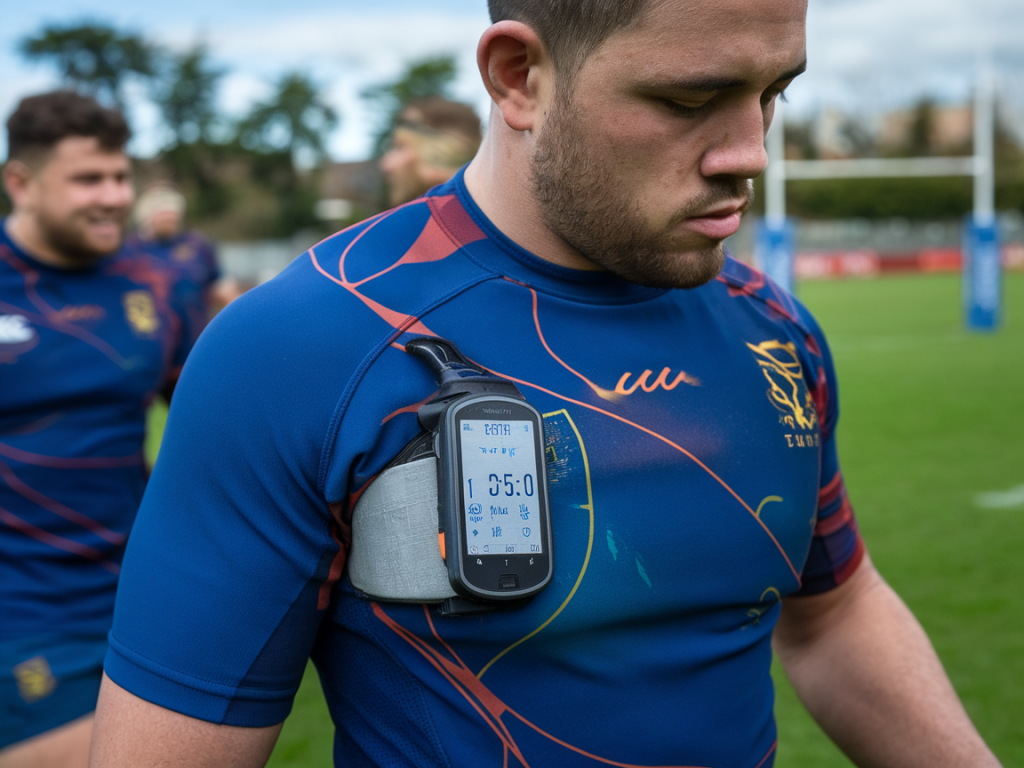
When our local amateur rugby club decided to get serious about reducing soft-tissue relapses — hamstrings, groins, calves — we didn't expect a revolution. We expected steady improvement. What happened instead was a 45% drop in relapses over a single season. The secret wasn't magic, elite funding, or a new miracle supplement. It was a simple, repeatable framework built around weekly GPS data and three targeted interventions that coaches and players could actually follow.
Why GPS — and why weekly?
Most clubs think of GPS as a high-tech toy reserved for elite programmes. I used to. Then I started wearing a modest Catapult unit during training and matches, seeing the numbers translate into conversations I could act on. GPS gives you objective load metrics: total distance, high-speed distance, sprint efforts, PlayerLoad (or equivalent), accelerations and decelerations. Those raw numbers become actionable when you track them week-to-week.
Weekly monitoring hits the sweet spot for amateur rugby. It's frequent enough to spot upward trends that predict relapse, but not so frequent that coaches drown in data. Each week we asked three questions:
Those questions led directly to three practical interventions — one applied after each monitoring cycle.
The three weekly GPS-informed interventions
We implemented a consistent trio of actions every week. Each is simple to explain, straightforward to apply, and requires minimal equipment beyond the GPS units.
When GPS showed a player had an abnormal spike in high-speed distance or an accumulation of sprints (for example, >30% above their recent rolling average), we modified that week's training load for that individual. That could mean:
Crucial point: the adjustment was pragmatic, not punitive. Players still trained; they just did lower-risk tasks that preserved fitness without provoking further tissue stress.
GPS doesn't replace clinical assessment, but it flags risk. For players flagged by load trends and subjective soreness reports we added short, focused prehab blocks. Typical examples:
We used simple equipment — kettlebells, bands, and a mat. The aim was to increase tissue resilience and address load-specific weaknesses that GPS had highlighted.
GPS alerted us to who needed more recovery and which modalities to prioritise. Players received a 3-step daily protocol after heavy-load weeks:
We also introduced a short education slot after training where I explained the week’s GPS trends to players. When athletes understood why they were doing specific exercises or why their training was being modified, adherence jumped.
How we measured success (and proof it worked)
At season start we logged baseline relapse rates from previous years, soft-tissue injury days lost, and a simple binary relapse definition: a soft-tissue injury of the same anatomical site within 12 weeks after return to play. For 18 months before the programme our club averaged a relapse rate of approximately 22% of all soft-tissue injuries. After implementing weekly GPS-informed interventions across one season, relapses dropped to ~12% — a reduction of roughly 45%.
| Metric | Pre-intervention (season avg) | Post-intervention (season) |
|---|---|---|
| Soft-tissue relapses (%) | 22% | 12% |
| Average days lost per soft-tissue injury | 21 days | 15 days |
| Player adherence to prehab protocol | ~40% | ~78% |
Two features stood out: relapses fell faster than new soft-tissue injuries, and the days lost per injury reduced — suggesting faster, more robust returns. The adherence increase was the invisible engine: when players understood their GPS numbers and had short, clear tasks, they did them.
Common questions we answered along the way
Is GPS necessary? No — but it accelerates decision-making. If you don't have GPS, you can approximate using session RPE (sRPE), training diaries, and careful communication. GPS just gave us finer granularity and removed guesswork.
Which GPS metrics matter most? For soft-tissue risk in rugby we prioritised:
Each metric is best interpreted relative to a player's rolling 3–6 week average rather than an absolute threshold.
Did load reduction harm performance? Not noticeably. By targeting only the players who showed spikes and ensuring alternative stimuli (technical, positional, or aerobic), match sharpness remained intact. In fact, availability improved — which is the foundation of sustained performance.
What about budget? We used one modest GPS setup (Catapult Clear or even a Garmin-based alternative) rotated across squads where necessary. The biggest investment was time spent educating coaches and players — and that paid dividends.
Practical steps for clubs wanting to replicate this
Start small. Here’s a checklist I used with our committee:
Pitfalls to avoid
Be cautious with blanket load cuts: don't remove meaningful conditioning from your athletes unless it's necessary. Avoid overcomplicating metrics; pick 2–3 that predict soft-tissue stress for your group. Finally, don't expect immediate perfection — data literacy takes time.
Implementing GPS-informed weekly interventions changed our club culture. Players moved from “why am I doing this?” to “I see why this helps.” That shift — combined with pragmatic load adjustments, focused prehab, and player-owned recovery — is what produced the 45% reduction in relapses. If your club wants to keep more players healthy and available, you don't need an elite budget — you need a repeatable weekly routine built around evidence and communication.